Anil Tyagi | How the Capital Panic-planned For The Great Cockroach Bite

At the American Embassy, five to six kilometres from South Block, cables flickered. An alert went out for American citizens to stay clear of Central Delhi, around Jantar Mantar, on July 20-21. Did the PMO take crucial decisions on that night?
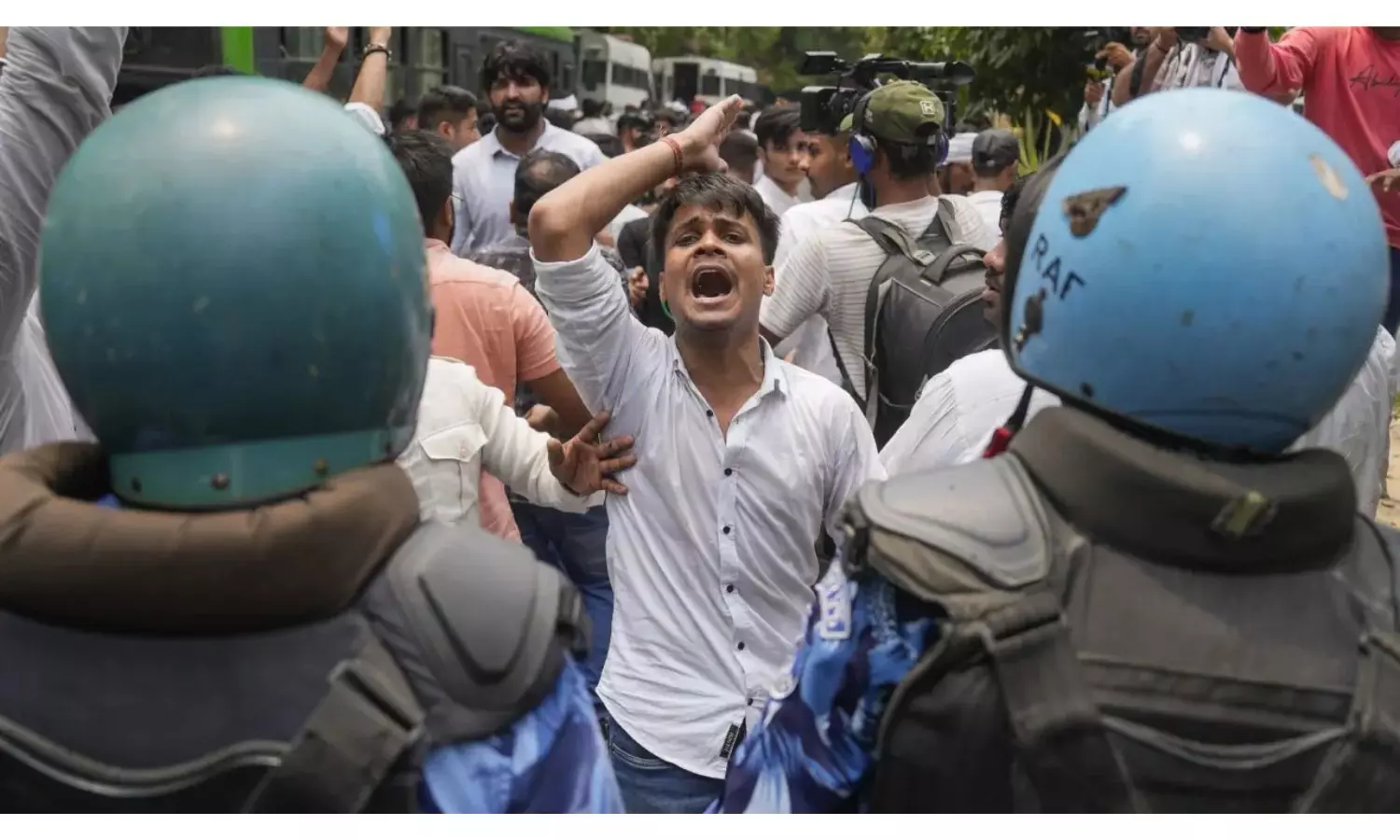
It was a Thursday, the night of July16. It was a long night of words rather than a night of long knives. The weapons came days later. The events centred around two powerful locations in the Capital. As the hunger strike of Sonam Wangchuk, the Ladakhi engineer-environmentalist, entered the 18th day, the Prime Minister’s Office (PMO) was active. Dr P.K. Mishra, principal secretary, PMO, and a 1972-batch civil servant from Gujarat cadre, summoned Govind Mohan, home secretary, and Jitender Singh, the minister of state for the PMO. The meeting lasted 47 minutes.
At the American Embassy, five to six kilometres from South Block, cables flickered. An alert went out for American citizens to stay clear of Central Delhi, around Jantar Mantar, on July 20-21. Did the PMO take crucial decisions on that night? Did the Americans know about the coming storm? On July 17, Satish Golcha, commissioner of Delhi Police, was removed before dawn. Anurag Kumar, a 1994-batch AGMUT, and special director, Intelligence Bureau, took charge. Decision-making moved out of the grasps of Delhi Police.
At 4.17 am on July 18, an unmarked convoy transferred Wangchuk to Safdarjung Hospital. On July 20, as the quiet call of “Sansad Chalo” rang across the country, tens of thousands of students, youth and strangers poured into the Capital. The rest is history. Pellet guns. Tear gas. Buckled barricades. Chaos. Maze of smoke. Blood, violence, and utter confusion. On July 21, politics took front seat. The Congress’ Rahul Gandhi announced a dharna against “Delhi Police atrocities” outside the PM’s residence. Jitender Singh, the PMO’s MoS, arrived for talks. It was clear that the command-and-control structure had shifted. Later, in the corridors of Parliament, Rahul Gandhi delivered the line that hung in the air like a blade: “If Amit Shah ordered the crackdown, he is culpable. If he did not know about it, he is incompetent.”
TVK’s Bureaucrats Meant to Change Tamil Nadu
The biggest challenge for C. Joseph Vijay, the chief minister of Tamil Nadu, and leader of Tamilaga Vettri Kazhagam Party, was how to efficiently run the state government. He wanted to set an example. This was his election promise. As a first step, Mr Vijay, whose life-size posters dot the state, has begun to quietly rearrange the civil servants, who lie at the heart of governance, who move files, control departments, and determine access to the CM. P. Senthilkumar, a 1995-batch officer is the new secretary-I to the CM. His experience in ministries and departments related to finance, health, and district administration, apart from election management, offers what Mr Vijay desperately needs — how a government runs and works. G. Laxmi Priya is Secretary-II to the CM, and brings a different profile, with experiences in the social sector and district administration. Together, the duo will be the bridge between politics and bureaucracy, decisions and delivery.
Then there is T. Udhayachandran, who has moved from finance to the Tamil Nadu Industrial Investment Corporation. He will be the bureaucratic for the business community. Moving from finance to TIIC places a seasoned financial administrator directly inside the industrial-investment machinery. Count the others. Pradeep Yadav has moved to MSME, Atul Anand to IT and digital services, P. Umanath to industries, and Nirmal Raj to transport.
Mariam Pallavi Baldev, with extensive exposure to industries and investment entities, remains an important cog in the civil services wheel. Jhon Arokiasamy and Vishnu Reddy, CM Vijay’s advisers, represent the political-access architecture. Of course, chief secretary Dr M. Sai Kumar will be the main anchor to the state’s reconstructed bureaucratic edifice. The administration of Tamil Nadu is changing fast, civil servant by civil servant.
VVIP Protocol’s Quiet Fix
Behind the polished choreography of every VVIP motorcade in the Capital lies a quiet drama and theatrics of the past that the protocol division of the ministry of external affairs prefers not to discuss publicly. Time and again, the jammers, the invisible electronic shields to protect a visiting dignitary, a foreign President or Prime Minister, worked a little too well. In many cases, while the luxury car with the dignitary in the convoy sailed through, the cars that followed found themselves in the dark. Navigation blinked out. Systems froze. In some awkward moments, the support vehicles stopped, leaving their occupants staring ahead, as the rest of the convoy pulled ahead. These are glitches that give protocol officers nightmares. Imagine a high-tech vehicular fortress stranded on a locked-down road because the technology guarding the VVIPs knocked it offline.
After several such close calls, the protocol division found a fix. It redrew the formation of the convoys. The VVIP vehicles, along with their jammer units, now travel in a tight, protected bubble. Everything else, whether escort cars, support staff, and the rest of the procession, keeps a carefully measured distance. They are close enough to remain within the overall security blanket and envelope, yet far away to stay clear of electronic blackouts. The solution is almost elegant. No grand announcements, no technicalities. Just a new road rule that is known only to those who move the powerful dignitaries through the capital. In the protocol division’s parking, they smile about the solution. The jammers protect the dignitaries. The distance between VVIP cars, and others in the convoy protects others. And the show, as always, goes on, without a glitch or a hitch.
The writer is a senior journalist and alumnus of the Delhi School of Economics. He is the editor of gfiles, India’s first magazine on civil services and governance. @AnilTyagilive.