Abhijit Bhattacharyya | Currency Stability Basis Of A Nation’s Economy

India’s first woman PM got deep into an all-round mess of two wars (the 1962 treachery by the Chinese and the aggression of Pakistani dictator Ayub Khan in 1965). A combination of drought, an adverse trade balance, a mounting current account deficit and acute foreign exchange crisis led to India facing potential economic collapse. The nail in coffin was due to the stringent loan/aid conditions imposed by the World Bank and International Monetary Fund
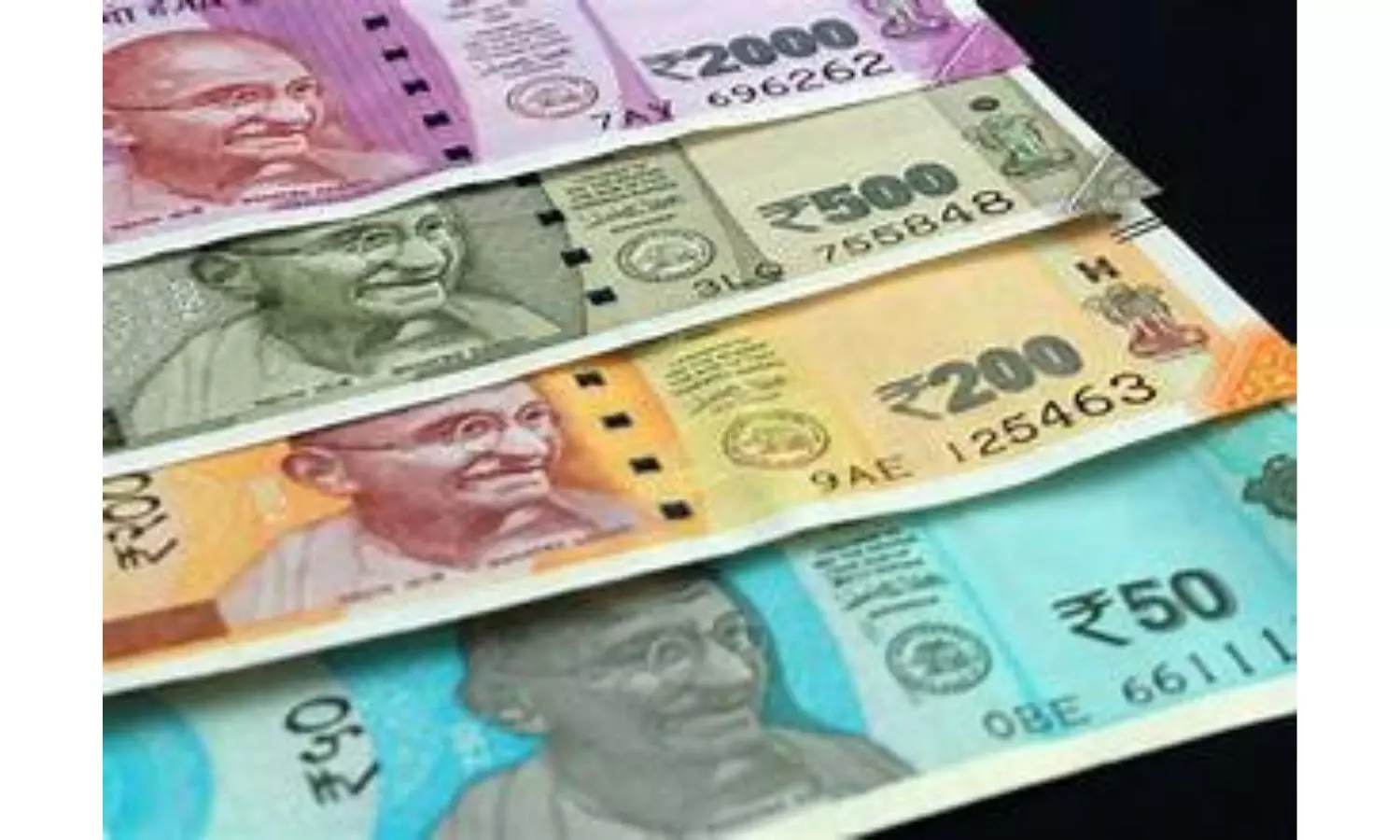
One doesn’t have to be a Nobel laureate in Economics like Dr Amartya Sen or Dr Abhijit Banerjee or a Nasa rocket scientist to state that no continent-like nation of India, with 1.42 billion people, will ever find a place under the sun with a chronic unstable, weak and depreciating currency. Not even if a GDP upswing puts India in the company of ultra-rich members of the global elite club.
Let us, therefore, explore the contours of the Indian rupee as in June 2026 it silently completed the “diamond jubilee” of the first major devaluation on June 6, 1966. Six decades ago, when the rupee was 4.76 to a dollar, it was devalued to 7.50 to a dollar by the government of Prime Minister Indira Gandhi, who had been catapulted into office just four months earlier, on January 25, 1966, following the death of Lal Bahadur Shastri.
India’s first woman PM got deep into an all-round mess of two wars (the 1962 treachery by the Chinese and the aggression of Pakistani dictator Ayub Khan in 1965). A combination of drought, an adverse trade balance, a mounting current account deficit and acute foreign exchange crisis led to India facing potential economic collapse. The nail in coffin was due to the stringent loan/aid conditions imposed by the World Bank and International Monetary Fund.
While a country’s GDP is not the only factor to measure a nation’s economic strength, the other factors also didn’t work in India’s favour, right from the 1950s. A major pressure point on India’s Budget of fiscal deficit, trade imbalance and rickety foreign currency basket was India always had a trade deficit from 1950 till now (2026), and there are no signs that it will improve in the foreseeable future.
Yet, India’s “forward movement” originated from the sheer size of India’s population rather than the per-capita value as an economic parameter. Thus, if the GDP of the UK, France or Germany is overtaken by India it must be understood that while the sheer number of people in these three European nations are just a fraction of India’s population, New Delhi’s per capita will reveal the reality of wide hiatus between the South Asian giant and the combo of London, Paris and Berlin.
However, it must be appreciated that while the exchange rate of one Indian rupee was one US dollar in 1947, it declined to 4.76 to the US dollar by 1949. Then, for 17 long years, the rupee’s rate was fixed and stable till June 1966, as it was pegged under the Bretton Woods system. It looks remarkable in retrospect when we experience the daily turbulence of the volatile Indian currency, endlessly nose-diving in the last six decades. However, the question is: how did the rupee’s rate remain steady for 17 long years, all through the Jawaharlal Nehru era, till 1963, and beyond -- till 1966?
Whatever be the views of both critics and admirers of Nehru, it is an indisputable fact that despite the “slow speed”, India had showed visible signs of growth in the Nehru era, sowing the seeds of indigenous industrialisation and steady macro-economic policy. This currency stability of India can only be seen in the context of post-1945 era Japan as an example of economic growth. The war left Japan vanquished and its economy ravaged. Japan was in ruins and nothing seemed possible due to debilitating inflation. Yet there emerged an unlikely saviour from America: Joseph Dodge, former president of Detroit Bank for 19 years. Dodge believed in the banker’s conservative philosophy: “Sound currency, balanced budget and financial stability”. In one stroke, Dodge had “arbitrarily decided” on a single exchange rate -- 360 yen to a dollar -- in 1949. Initially, what seemed to be a Japanese currency massacre by an American, remained rock steady for 22 years till 1971. Tokyo’s devalued currency made Japanese goods dirt cheap in global markets, which laid the foundation of the “Japanese economic miracle” in the next few decades.
Yesterday’s (1949) 360 yen to a dollar is now 160 yen to one dollar. The yen gained strength in 77 years. During the same time, however, the Indian currency plunged -- from 4.76 to the dollar in 1949 to around Rs 95-96 to the dollar in the foreign exchange markets. Japan’s yen rose. India’s rupee fell, and continues to fall, or keep fluctuating, virtually every day.
The irreversible reality is that India’s trade deficit continues as it is unable to take advantage of its “weak” currency to push the export of its goods, commodities and services.
After 1966, the depreciation of the rupee and the imbalance in trade ran hand-in-hand. In 1976, the rupee stood at 8.96 to the dollar; in 1986 it was 12.61; in 1996 it shot up to 35.43; in 2006 it became 45.31; in 2014 it's 62.33. In 2026, it’s fluctuating in the mid-90s, with uncertainty all around. Thus, the currency depreciation and trade imbalance are in tandem, causing severe damage to India’s economy.
There are many causes and consequences; and remedial steps are easier said than done. Some powerful corporations and monopolists often undermine the interests of most Indians to boost American capitalism. A new class of billionaires, both foreign and Indian, are constantly focused on furthering their own class interests, certainly not on their nation’s economy.
One must remember that unlike Japan (1970s-90s) and China (mid-1990s), India is not primarily an export-oriented economy, and still remains heavily dependent on foreign-origin raw material for domestic factories and imported goods for home market. Therefore, the reckless import of most consumer goods, irrespective of their value, quality, need, necessity and utility, will only drain out the nation’s much-needed foreign exchange reserves.
New Delhi has no option but to urgently impose fiscal discipline and put import restrictions, re-calibrate its current account deficit, ensure prudent use of foreign exchange, reduce all high-cost foreign debt and tackle the squeezed purchasing power of people who are gasping under the weight of spiralling inflation and the pressure of mass despondency. It’s high time to take stringent remedial measures to reverse the “diamond jubilee” downswing to stabilise the rupee-dollar exchange rates as it prevailed in Jawaharlal Nehru’s era. It’s time for India to bring back currency stability that prevailed 1949 to 1966.
The writer is a former chief commissioner of customs in New Delhi and Hyderabad and an alumnus of the National Defence College, New Delhi