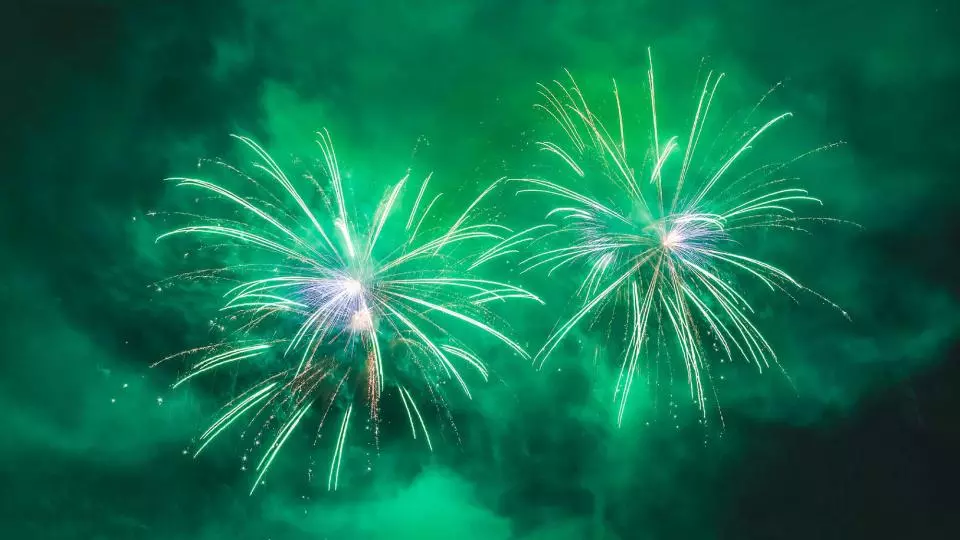
With Diwali approaching, firecrackers are set to add another layer of toxic fumes to an already polluted atmosphere.
Winter is coming and the city finds itself in the suffocating embrace of a real-life Dementor’s Kiss. Much like the sinister creatures in Harry Potter that suck the breath, warmth and life out of their victims, the toxic smog has begun draining the city of its air, its vitality and its ability to breathe. And the worst may still be ahead.
With Diwali approaching, firecrackers are set to add another layer of toxic fumes to an already polluted atmosphere. What is even more disturbing is the growing religious fanaticism surrounding the issue of firecrackers. Attempts to regulate their use or appeals for restraint are portrayed as an assault on Hindu tradition. The argument has become so absurd that even asking people to celebrate Diwali without choking the city is treated as an act of hostility towards Hinduism. The question is, since when did clean air become a threat to religious identity? No religion can claim exemption from the responsibility of protecting public health. Faith cannot be a shield for environmental irresponsibility.
The Supreme Court’s decision to allow the sale and bursting of certified green crackers in Delhi-NCR for a limited period around Diwali will contain air pollution only if its directives are implemented in letter and spirit. The Court permitted the sale and bursting of green crackers for just two days — November 7 and 8 — and within strictly prescribed hours: 6 am to 7 am and 8 pm to 10 pm. However, the restrictions imposed by the top court in the past have repeatedly been flouted, with conventional crackers being sold under the guise of green crackers. The police have repeatedly proved inadequate at enforcing orders on the sale and bursting of firecrackers.
But the green crackers are no saints. A study by the Delhi Technological University flagged that green crackers produce a high concentration of ultra-fine particles, which are more dangerous than PM 2.5 and PM 10. The court’s decision comes as the national capital’s air quality has sharply deteriorated, prompting authorities to invoke Stage II of the Graded Response Action Plan, which includes restrictions on construction and demolition activities and curbs on the use of certain non-compliant vehicles. However, the court placed the onus on pollution-control authorities to generate comprehensive data on the environmental and health consequences of the relaxation. It has also ordered the collection of hospital data on the increase in patient admissions and any reported deaths attributable to pollution following the festival.
The state governments will have to file affidavits detailing compliance, enforcement action and the health impact of firecracker use by December 14. The Supreme Court may monitor compliance through periodic hearings. But the real test will be whether its orders are enforced on the ground and whether officials responsible for violations are held accountable.
What is, however, more disturbing is that people bursting firecrackers are completely oblivious to the damage they inflict not just on themselves but on those around them. Children, whose lungs are still developing, are particularly vulnerable to toxic air. Yet these children are exposed to a cocktail of poisonous fumes. The irony is difficult to miss — in the name of celebrating a festival with family, people end up putting their own families’ health at risk. Diwali is a festival of light, not a licence to fill the air with toxic fumes.