SIA Searches Yasin Malik’s Srinagar Home, 7 Other Locations in Kashmiri Pandit Nurse’s Murder Case

SIA raids Srinagar homes in probe of 1990 murder of nurse Sarla Bhat
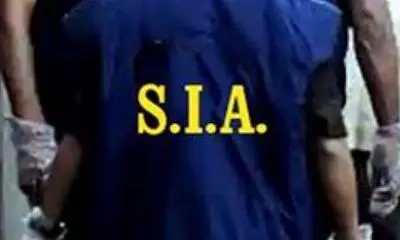
Srinagar: The Jammu and Kashmir State Investigation Agency (SIA) on Tuesday conducted searches at eight locations in capital Srinagar as part of an ongoing investigation into the 1990 abduction and murder of Sarla Bhat, a Kashmiri Pandit woman, by separatist militants.
Bhat, working as a nurse at City’s Sher-i-Kashmir Institute of Medical Sciences (SKIMS) was abducted and allegedly tortured, and brutally murdered by the members of the Jammu Kashmir Liberation Front (JKLF) on April 20, 1990, during the initial days of militancy in the Valley.
The J&K Police are reinvestigating nine high-profile cases from 1989–1994, seeking public cooperation while ensuring witness confidentiality.
The raids targeted residences, including that of JKLF chief Mohammad Yasin Malik in Srinagar’s congested Maisuma locality.
59-year-old Malik, 59, currently serving a life sentence in Deli’s Tihar Jail, was a day ago directed by the Delhi High Court to respond within four weeks to the National Investigation Agency’s (NIA) appeal seeking to enhance his life imprisonment to the death penalty in a 2017 terror funding case.
The court noted Malik’s failure to appear virtually and ordered his virtual presence for the next hearing on November 10, citing security concerns. The NIA argues that Malik’s guilty plea under the Unlawful Activities (Prevention) Act (UAPA) should not exempt him from capital punishment, emphasizing that his crimes aimed to secede Jammu and Kashmir from India.
The police sources here said that the other locations raided and searched by the SIA sleuths who were assisted by the J&K police and CRPF included homes in Srinagar’s Chamardori Zainakadal, Illahi Bagh Buchpora, Danderkah Batamaloo, Kadi Kada’l, Sazgaripora, Al-Hamza Colony Ahmednagar, and Tiploo Mohalla Anchar (Soura).
The investigation pertains to FIR No. 56/1990, originally filed at Nigeen Police Station here under sections 302 and 120 of the Ranbir Penal Code (RPC), once the primary criminal code for the erstwhile state of J&K repealed and replaced by the Indian Penal Code post-August 2019, Section 3/27 of Arms Act, and 3/2 of TADA, now under SIA’s purview.
The searches, the SIA said, yielded incriminating evidence to uncover the terrorist conspiracy and deliver justice.
The sources said that a SIA team led by Deputy SP Abid Hussain, along with SHO Maisuma and an Executive Magistrate, searched Malik’s Maisuma residence. The other premises searched by the SIA include the houses of Javed Ahmed Mir, a former JKLF chief commander, at Chamardori, Zainakadal, Peer Noor ul Haq Shah alias Air Marshal Noor Khan at Illahi Bagh Buchpora, Reyaz Kabir Sheikh, brother of slain JKLF commander Abdul Hameed Sheikh at Danderkah Batamaloo, Bashir Ahmad Gojri at Kadi Kada’l, Feroz Ahmad Khan alias Jan Mohammad alias Jana Kachroo at Sazgaripora, Kaiser Ahmad Tiploo son of another slain J&K commander Ghulam Mohammad Tiploo at Al-Hamza Colony Ahmadnagar and the family’s ancestral home at Tiploo Mohalla Anchar.
This action aligns with Lieutenant Governor Manoj Sinha’s July 1 directive to reopen long-closed militant-related cases from the 1980s and 1990s, focusing on atrocities like the murders of Sarla Bhat and retired judge Neelkanth Ganjoo.
Ganjoo, a Kashmiri Pandit, had in 1968 sentenced Maqbool Butt, co-founder of the pro-independence Jammu Kashmir National Liberation Front (JKNLF), to death following an in-camera trial held inside Srinagar Central Jail. Butt was convicted for the murder of intelligence official Amar Chand during his militant activities in the Kashmir Valley in the 1960s. In 1989, Ganjoo was assassinated by suspected JKLF militants while walking on Srinagar’s Hari Singh High Street, and his residence in Karan Nagar was subsequently set ablaze. Butt was executed by hanging in Tihar Jail on February 11, 1984.
Sinha’s orders include filing fresh FIRs, providing government jobs and financial aid to victims’ families, and identifying government employees linked to past militant activities. Special grievance cells and toll-free helplines have been set up in districts like Anantnag, Baramulla, and Doda to support affected families.
The initiative aims to address “historical grievances”, particularly for Kashmiri Pandits, amid a decline in militancy since 2019, though targeted killings of minorities have risen. While the BJP and Kashmiri Pandit groups support the move, critics warn of potential alienation and political motives, given the timing before elections and the region’s complex history of militancy and counter-insurgency. The J&K Police are reinvestigating nine high-profile cases from 1989–1994, seeking public cooperation while ensuring witness confidentiality.
While speaking at a function held here on August 5 to over job appointment letters to 158 next of kin (NoKs) of terror victims, Lt. Governor Sinha announced a firm stance against terrorism, stating that the government has set a new benchmark for dealing with terrorists and their sponsors, ensuring equal punishment for both.
He emphasised, “India has made it clear that if terror is a state policy, it will face a visible and forceful response. Under Prime Minister Narendra Modi’s leadership, a new red line has been drawn against terrorism.”
In posts on ‘X’ on that very day, Sinha stated, “Wounds that have persisted for decades are now being healed. 158 NoKs of Kashmiri civilians killed by Pakistan-backed terrorists were handed over appointment letters. Today’s landmark event provided a sense of closure to the families who have silently suffered trauma for years.”
Alleging that the “terror state” Pakistan has been shedding innocent blood through its proxy terrorist outfits in the last over three decades, he had asserted, “Time did not erase the pain of loss. Invisible scars on their soul can be felt, and the mute eyes are witnesses to many unfulfilled dreams.” He had added, “The long wait for justice and for healing to begin is over for the terror victim families. They have come out to reveal the role of Pakistani terrorists and the terror ecosystem that was operating in J&K. Tribute to civilian martyrs and I salute the courage and perseverance of their loved ones.”