It covers most of the major areas of life — population, wealth, industry, agriculture, wealth, incomes, politics, professions, weather, education, entertainment, sport, languages, poverty, crime
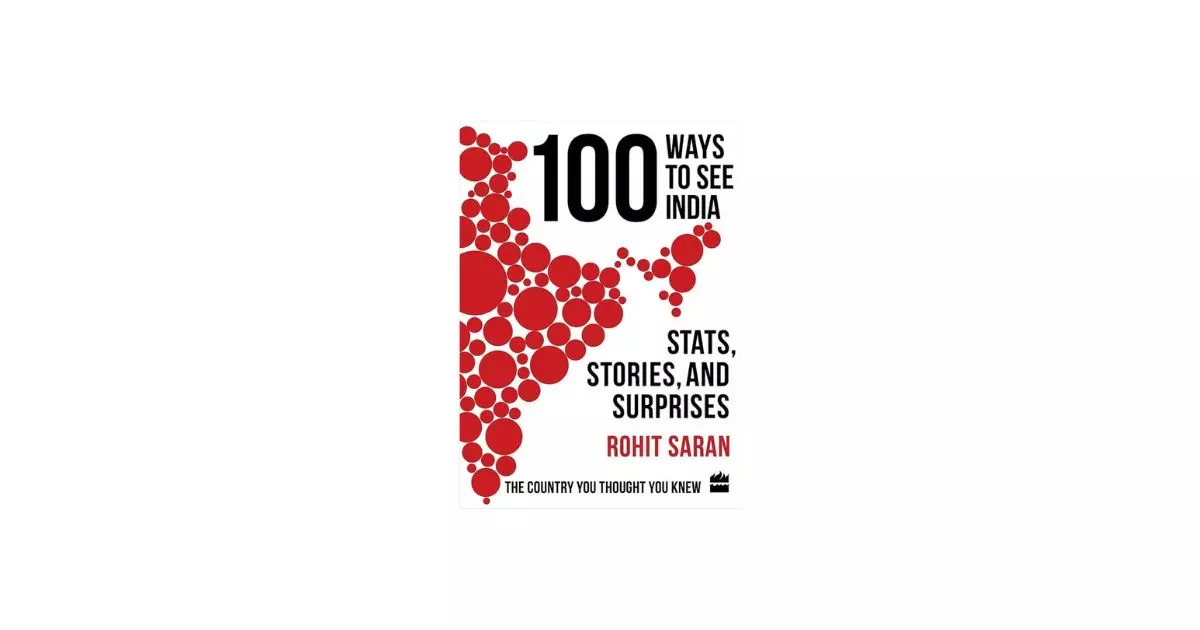
This book has something for everyone interested in modern India who can deal with plenty of numbers, but it’ll also leave most of those people just a little dissatisfied because there are questions it leaves unanswered.
It covers most of the major areas of life — population, wealth, industry, agriculture, wealth, incomes, politics, professions, weather, education, entertainment, sport, languages, poverty, crime… Most of these get a chapter, some only a page or two, but practically everything is in there somewhere.
Covered here is also change in these areas. Take women, for instance. In a chapter entitled, “When Women Lead, Everything Changes”, there are numbers showing how girls began to outnumber boys in primary schools in 2010. Also outlined here are the changes that this greater participation of women in society and in familial decision-making has brought about. Infant mortality, as measured by deaths of children within a year of birth, has dropped steadily from 138 per thousand in 1971 to just 28 in 2023.
It also tells you how this has affected maternal mortality, the women who die in childbirth. This, too, has dropped considerably, from 384 per lakh in 2000 to just 103 in 2024. And it shows how women are having children later in life — there are fewer teen mothers.
So far so good. What sticks out to one familiar with numbers, however, is that they’re inconsistent. Infant mortality date covers the years from 1971 to 2023, while maternal mortality covers 2000 to 2024. You might say this is no big deal, but it’s a bit like having a jigsaw puzzle in which the pieces don’t quite fit together. The patterns aren’t clear enough to show possible causes, so you don’t understand what might have led to those changes.
You get a sense of a different kind of weakness in, say, the chapter on sports. There’s a mention that some sports performances in India, notably track events, are 60 to 90 years behind performance in leading countries. The basis for this comparison? The year in which the world record was the current Indian record. So, for example, if India’s best marathon performance is equivalent to the world record of, say 1960, the author concludes that India is 76 years behind. Given that some records are vastly better than the ones they break, and therefore last longer, this might not be a very good basis for comparison: Athletes such as Sergei Bubka and Bob Beamon left records that stood for decades, while others have lasted weeks.
There’s more on sports. India’s medal tally in, say, the Olympics, has risen considerably since 2000. The country has earned more than 40 per cent of its Olympic medals in this period. Sports other than cricket, cerebral sports such as chess, have risen considerably in popularity in this century. There are no comparisons with countries in comparable income groups, and, given the data on per capita income and sports performance, there could well be a relation hidden in those parallel bits of information.
Getting good; consistent data is still very much a problem in India. The author is well aware of this. One of the topics covered is how India’s coastline grew dramatically because the government got a much finer picture of the intricate shape of the coast — the author is well aware of the importance of yardsticks in measurement. Up front is the claim that the tables in this book, which are available online, will be updated regularly. The purpose, laid out up front, is to aid research, but also to “build data confidence — where readers learn to ask better questions…”
That’s a long road ahead, and this book is a substantial first step.
100 Ways to See India: Stats, Stories and Surprises
By Rohit Saran
HarperCollins
pp. 216; Rs 999
