Great Nicobar is near maritime routes like the Strait of Malacca, making it attractive for port and logistic infrastructure. Island on Edge forces readers to ask: At what cost?
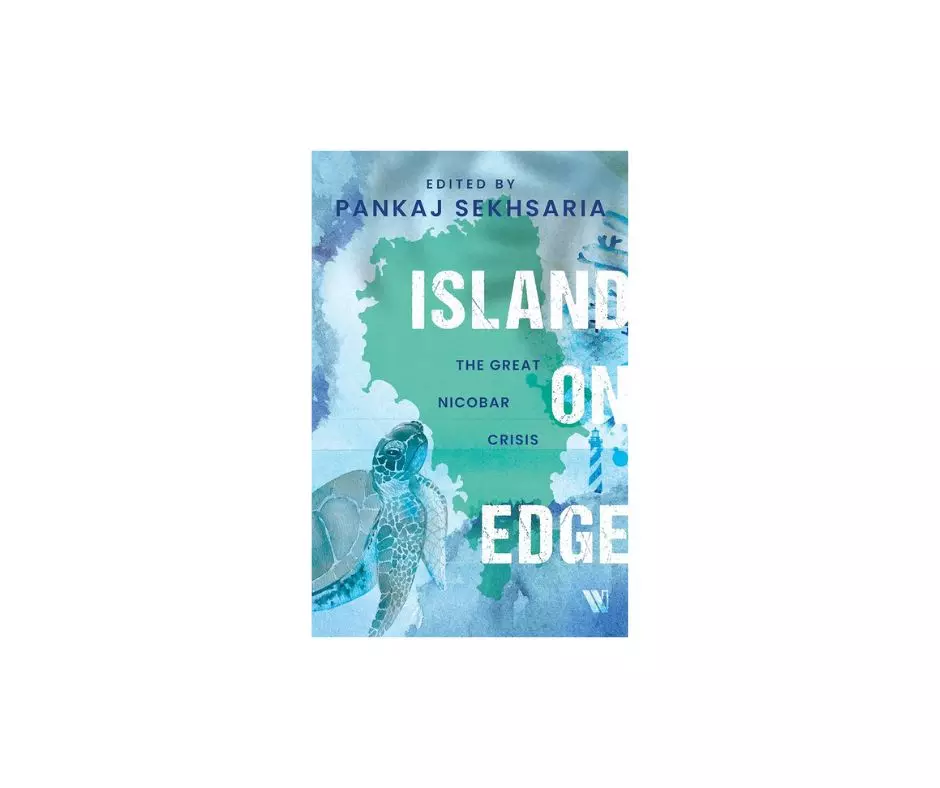
Island on Edge is a pressing collection of essays, edited by Pankaj Sekhsaria, on one of the most contentious development projects in 21st-century India: the proposed mega-infrastructure project on Great Nicobar Island. Sekhsaria combines legal documentation, reportage, and critical analysis to expose flaws in social, environmental and legal aspects of the project and also to ask fundamental questions on our vision of development in fragile ecosystems.
Island on Edge is a biting response to a Rs 82,000-crore plan that envisages a port, a township and several other facilities towards building a cargo transshipment centre through which a large part of world trade will be routed. Sekhsaria has gathered works by journalists, researchers, and scientists to document the legal battles, environmental impact assessments, and ground realities surrounding the project.
Its multidisciplinary coverage stands out. Rather than treating the Great Nicobar debate as purely social or environmental or economic or even strategic, the essays consider the project as an intersection of environment, society, law and ethics. The essayists show how the project, far from being a straightforward economic advantage, threatens to devastate rainforests, disrupt marine life in crucial animal nesting grounds, and tear apart the cultural and social fabric of indigenous Nicobarese and Shompen communities. The project besides, is sited where it could be vulnerable to flooding, earthquakes, and tsunamis.
What emerges is a cadenced criticism of development policies that consider grand visions and geopolitical initiatives more valuable than sustainable societies, ecosystems, and geographical reality. Great Nicobar is near maritime routes like the Strait of Malacca, making it attractive for port and logistic infrastructure. Island on Edge forces readers to ask: At what cost? Clearing large areas of tropical rainforest will destroy biodiversity, from endemic birds and mammals to coral reefs: losses that can’t be offset by faraway afforestation schemes or technological patches.
Sekhsaria and his band of fellow-essayists are particularly tough on how legal and procedural clearances have been granted: The very agencies that ignored due process have been granted conservation funds! They show that environmental impact assessments have lacked depth, tribal consultations have been sparse and that broader public dialogue has either been neglected or hidden.
The style is authentic and credible while being accessible: There’s little jargon. Its structure enables the reader to see the diversity of the potential disaster, from ecological devastation to cultural extinction. However, this strength also points to a weakness: The book sometimes lacks the narrative integrity of the work of a single author. Continuity rises and falls, with some essays going more into legal technicalities and others into philosophical critiques of development. Readers expecting a straightforward argument may need to shift gears between pieces, though this variety also reflects the inherently complex nature of the crisis. Also, in trying to identify flaws in the project, the focus is criticism rather than on developing an alternative approach.
Island on Edge: The Great Nicobar Crisis is timely and needful. It forces policymakers, conservationists, and citizens to face disquieting questions about the nature of progress, the rights of indigenous communities, and future of India’s environment, and geopolitical assumptions. Above all, it’s a huge contribution to environmental thought, one that should resonate far beyond a single island or a single nation.
Island on Edge: The Great Nicobar Crisis
By Pankaj Sekhsaria
Westland Books
pp. 241; Rs 499
