A message from a close friend and professional partner, a photographer, Inseon, wakes Kyungha from this existence. Inseon is in hospital recovering from a carpentry accident in which she’s lost her fingers
During a scorching Seoul summer, Kyungha, a writer and historian, subsists on water and rice and white kimchi, ordered online and delivered to her apartment. Troubled by migraines and digestive ailments, she refuses to leave her apartment for treatment. Instead, she works on her will, deciding the disposition of her property but unable to name an executor. She works on her suicide note, her letter of leavetaking, her inability to perfect it warding death away.
A message from a close friend and professional partner, a photographer, Inseon, wakes Kyungha from this existence. Inseon is in hospital recovering from a carpentry accident in which she’s lost her fingers. She asks Kyungha to go to her house on the island of Jeju right away to save Inseon’s pet budgie, and Kyungha, for whom the friendship is precious, does just that.
But winter has set in on the island: it is covered in snow, and a storm is gaining strength. Kyungha finds the bird motionless, and is unsure of whether it lives or not. But then, conditions are such that she has to stay, which she does. The bird, a budgie, begins to show signs of life.
It’s worthwhile explaining a little of the history of the island. When Korea was divided, some years after World War II, its inhabitants had strong leftist leanings and protested against being included in the South. Government paramilitaries under the oversight of the US Army putting down the protests killed many thousands — estimates range between 14,000 and 30,000 — including women and children, even infants.
In Han Kang’s writing, the snow in Jeju blankets the killings, which, however, still lurk below the surface, available to anyone persistent enough to dig. Some of the surreal quality to Han Kang’s writing comes from a snowstorm that distorts the borders of reality and hallucination, permitting apparitions to drift in and out of the narrative that actually dissolves the distance between the hidden tragedies and atrocities of the past and the present.
Kyungha has written about massacres: her last book was about one in the city of G. But this time it’s up close and personal. Inseon’s father survived because the prison he was in was overcrowded.
Inseon — or an apparition of her — turns up on Jeju Island in the midst of a terrible snowstorm, and as she and Kyungha explore Inseon’s memories and her mother’s notes, details of the horrors of 1948 begin to emerge. The fact of Inseon’s father’s survival comes up, for instance, as Inseon and Kyungha begin to explore Inseon’s mother’s notes. The unreason behind the killing echoes through the narrative: Inseon’s uncle, imprisoned at about the same time as her father, is shot on a beach along with a group of people from another village, and children are shot in the name of ‘extermination’. But there is also a fragile redemption in the form of a single candle flame leading to life, an icon of the friendship between Kyungha and Inseon.
Easily the best book I’ve read in the last couple of years.
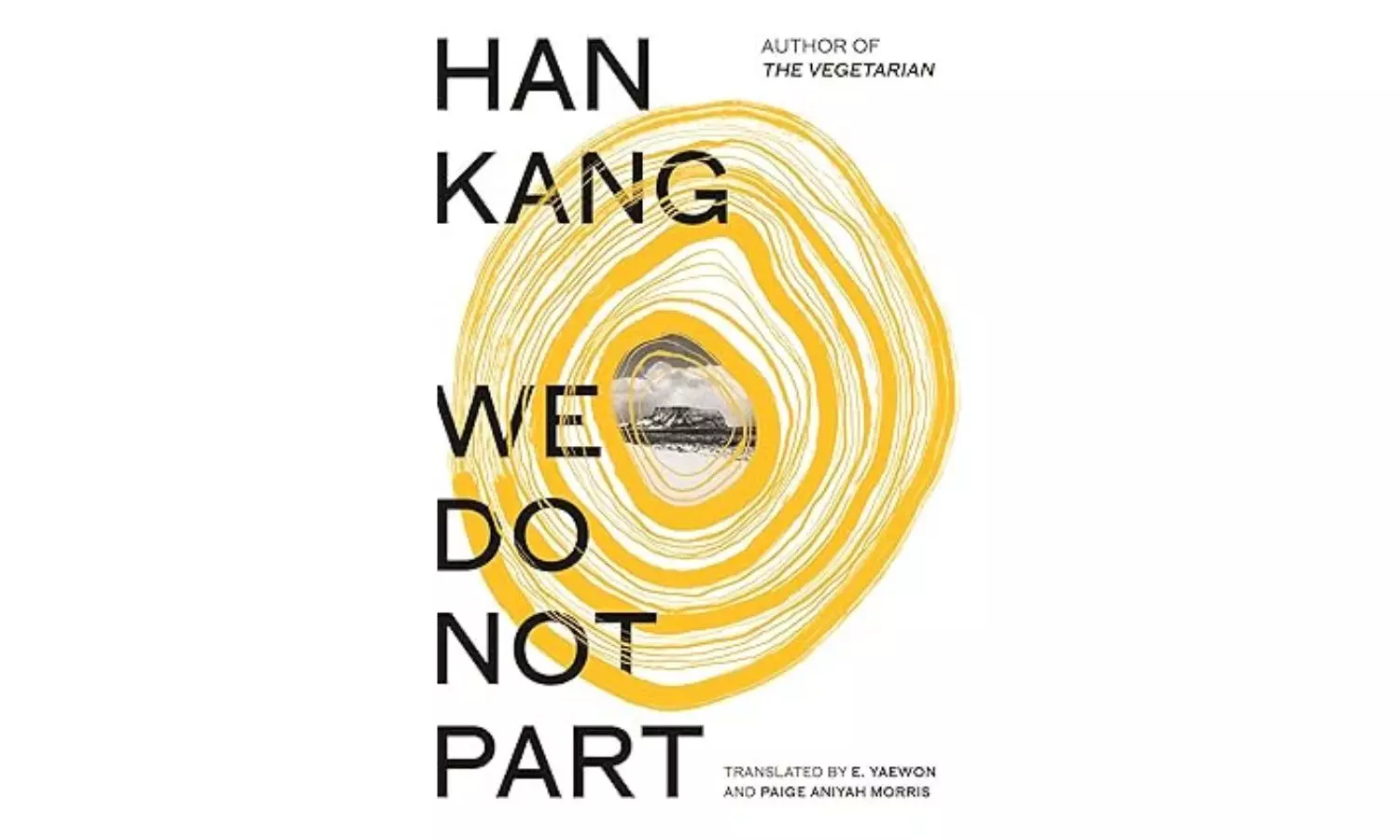
We Do Not Part
Han Kang
Penguin
pp. 384; Rs 999
