Mr Bobi recalls the rainy day he first saw Ms Noora in no man's land between the two Balkan countries
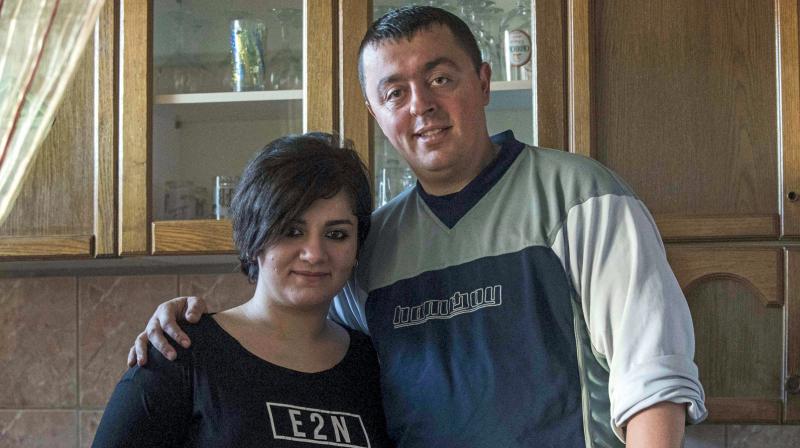
Kumanovo (Macedonia): The scene was hardly conducive to romance: she was a sick Iraqi in a wave of refugees trying to enter Serbia, while he belonged to the stern Macedonian police force keeping guard.
But Noora Arkavazi, a Kurdish Muslim, and Orthodox Christian Bobi Dodevski quickly fell in love after they met at the muddy border in early March — and celebrated their wedding four months later.
Mr Bobi recalls the rainy day he first saw Ms Noora in no man’s land between the two Balkan countries, when he was working only by chance after swapping shifts with a colleague.
“It was destiny,” the affable 35-year-old tells AFP over tea in his small apartment in the northern Macedonian town of Kumanovo, where he now lives happily with his young wife.
Ms Noora, 20, hails from Diyala, an eastern province plagued with violence in the Iraqi conflict. She says at one point Islamic State jihadists kidnapped her father, an engineer, and demanded thousands of dollars for his return.
Early in 2016, Noora and her brother, sister and parents abandoned their home and began a long journey west, crossing the border into Turkey, taking a boat to the Greek island of Lesbos and eventually entering Macedonia.
Their path was one well-trodden by hundreds of thousands of people escaping war or poverty in the Middle East, Africa and Asia — and like many of their fellow travellers, the Arkavazis had set their sights on Germany. While her family continued on their odyssey, Ms Noora stayed put in Macedonia after Cupid’s arrow struck. “I had a simple dream to live with my family in Germany,” she says. “I didn’t imagine a big surprise for me here.”
Mr Bobi says he knew he had found someone special. “When I saw Noora for the first time, I saw something good in her eyes.”
Ms Noora, who speaks six languages and began helping the local Red Cross, liked the way the tall policeman would play with the migrants’ children, unlike some of his more serious colleagues.