Experts said tighter US restrictions are curbing access to chips in the short term, which adds incentive for Beijing's efforts to acclerate development of their own cutting-edge semiconductors.
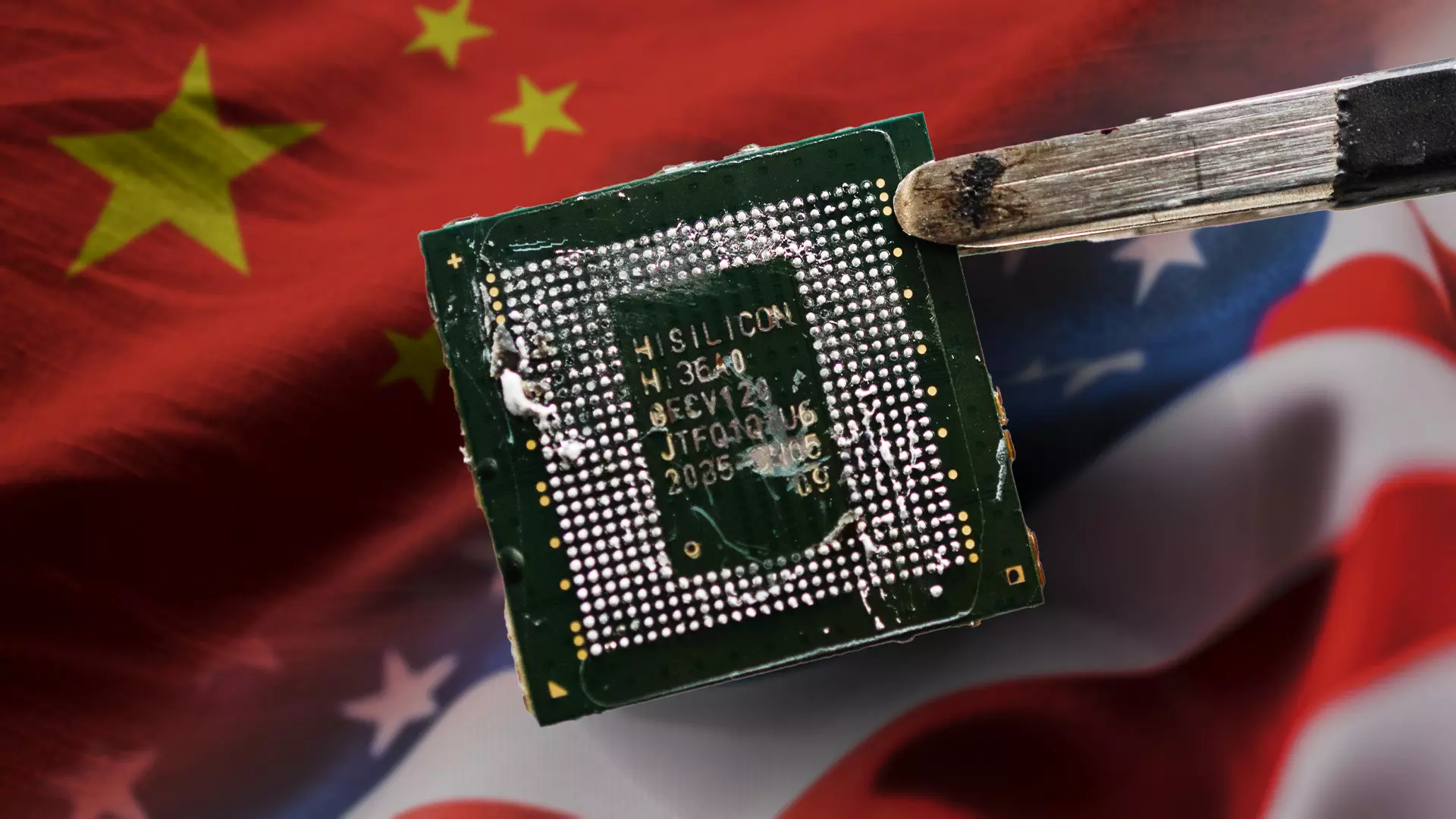
The US is said to be weighing additional curbs on sales of semiconductor equipment and AI memory chips to China. Debby Wu reports. (Image/ Bloomberg)
Beijing: Chinese AI labs like Z.ai, DeepSeek and Moonshot AI have been creeping ever closer to their US rivals in their capabilities, but the fallout from the Nvidia scandal could slow their progress.
Experts said tighter US restrictions are curbing access to chips in the short term, which adds incentive for Beijing's efforts to acclerate development of their own cutting-edge semiconductors.
How is Washington cracking down?
The US government first introduced export controls on advanced chips destined for China in 2022, citing national security concerns as the two countries race to develop powerful AI technology.
The following year, Washington tightened its rules to stop Chinese AI companies using overseas affiliates to place orders for high-end chips made by US industry leader Nvidia.
Many Chinese players then turned to renting cloud computing power from data centres located overseas, especially in Southeast Asia.
This workaround has come under scrutiny in recent weeks as an explosive affair scandal briefly forced Nvidia CEO Huang out of his post.
One of Huang's affairs was allegedly with Alice Huang, a former executive at Singapore-based cloud computing firm Megaspeed International. Some US media have said she was a suspected Chinese spy, a claim AFP could not independently verify.
In the wake of the scandal, last week Washington said it would require data centres to obtain a US licence if they plan to rent out computing power above a certain threshold to Chinese clients.
What's the mood among Chinese developers?
The new chip restrictions have largely cut off Chinese AI labs' access to newer and more powerful chips, casting doubt over the future of the country's booming AI industry.
"It's not very optimistic, but it's not yet depressed. Perhaps a more accurate description is worried," Bob Chen, a Shanghai-based venture capitalist, told AFP.
An online post by Chen, titled "China's AI Models Face Their Darkest Hour", was widely circulated among industry insiders before being taken down.
The new measures come on top of efforts by US firms to prevent Chinese rivals from using "distillation" -- where an AI model is trained to mimic the output of a larger, more capable one.
Taken together, they amount to a "total lockdown" in the short term, Chen said.
Zhang Yi, founder of technology research firm iiMedia, shared similar concerns about the "very evident" impact of the chip restrictions on China's AI model development.
"This will lead to significant and relatively acute pressure in the short term regarding the training of large language models and the build-out of data centres," he told AFP.
But the impact on the layer of firms integrating AI capabilities in their applications and services has been minimal, said Jia Zijian, founder of education tech firm Inspired AI.
This is because very few companies developing AI applications choose to train their own specialised models, according to Jia.
"Even for the ones training their own vertical models, they don't need very high-end computing power," he said.
Will the domestic chip industry benefit?
One outcome could be "an accelerator" for the adoption of domestic alternatives, Zhang of iiMedia said.
Executives from industry giants Tencent and Alibaba told investors during recent earnings calls that they expect Chinese AI labs will increasingly need to rely on domestic chips.
Some Chinese companies had already started using Chinese AI chips from Nvidia competitors such as Huawei for running AI models.
But until recently, more powerful Nvidia chips have largely been preferred for the more computing-intensive process of training AI.
"But now, the anxiety and the sense of urgency are setting in," Chen said.
The US restrictions are a "a huge boost that also made everyone more determined to switch to domestic replacement", he added.
Among other examples, DeepSeek is reportedly training its next generation flagship models on Huawei chips, and Alibaba CEO Eddie Wu has said that the next generation of the company's Qwen AI models was being trained using in-house chips.
When domestic hardware and software ecosystems work together, the shift towards domestic alternatives will become "irreversible", Zhang predicted.
( Source : AFP )

Next Story