PM Modi's trip to the UK in July earlier this year, has infused this partnership with fresh momentum. It promises substantial, tangible benefits for citizens of both countries
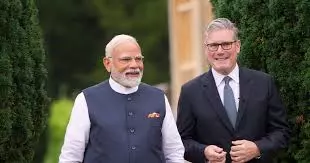
In the bustling financial capital of Mumbai, a palpable sense of anticipation is building as UK Prime Minister Keir Starmer spends his Second day in the city. All eyes are fixed on the grand finale of the Global Fintech Fest, where, in a powerful demonstration of a burgeoning and renewed alliance, Prime Minister Narendra Modi and Prime Minister Starmer will together deliver keynote addresses. This joint appearance is far more than a diplomatic formality; it culminates decades of evolving cooperation and embodies a pivotal new chapter in the centuries-old relationship between India and the United Kingdom.
The year 2025 marks a decisive and historic turning point, elevating a connection that spans centuries into a formal "Comprehensive Strategic Partnership." Guided by the ambitious "India-UK Vision 2035," a shared blueprint for mutual growth and prosperity, this realignment is cemented by a strong political will bridging both nations. Starmer's ongoing two-day visit to India, reciprocating PM Modi's trip to the UK in July earlier this year, has infused this partnership with fresh momentum. It promises substantial, tangible benefits for citizens of both countries. Tomorrow's address, before an audience of up to 100,000 global delegates, is set to be a defining moment—spotlighting the incredible potential of this partnership on one of the world’s most influential financial technology stages.
For Prime Minister Narendra Modi, whose diplomatic journey has included deepening ties with strategic partners worldwide, this moment affirms India’s emergence as a global powerhouse. PM Modi’s efforts, from championing economic reforms at home to engaging with global democratic partners, have laid the foundation for this renewed chapter with the UK—a country historically intertwined with India in multiple spheres, now approached as a partner of equals.
An Engine for Economic Growth and Opportunity
The foundation for these highly anticipated Mumbai announcements was laid earlier this year with the signing of the Comprehensive Economic and Trade Agreement (CETA) on July 24, 2025. After years of intense negotiations, this landmark agreement reshapes the trade landscape. For Indian consumers, manufacturers, and exporters, the deal opens new opportunities that could transform industries and livelihoods.
The agreement promises to eliminate tariffs on 99% of Indian goods entering the UK market. This includes traditional Indian textiles, leather goods, agricultural exports, and automotive components. Beyond the numbers, this deal aims to create jobs, foster innovation, and boost prosperity across sectors.
The figures are significant. Bilateral trade is projected to increase by £25.5 billion annually, up from the current £43 billion. More crucially, it could add £5.1 billion to India’s annual GDP over time. Behind these numbers lie the hopes of millions of Indians expanding their reach to global markets, from artisans to technology startups.
The agreement also promises streamlined customs processes for goods clearance within 48 hours, slashing the red tape that small and medium enterprises often face. This reflects PM Modi’s long-standing push to transform India into a top global trade and investment destination.
Often quoted by PM Modi in his policy speeches, the mantra of "ease of doing business" finds renewed relevance here, as the agreement supports not only large enterprises but particularly the small and medium-sized businesses that anchor India's economic fabric.
Bipartisan UK support for the deal ensures political stability, signaling the partnership's longevity beyond electoral cycles. This illustrates the significance the UK places on India as a partner in its post-Brexit global outlook.
Strengthening the Security Bond in the Indo-Pacific
The partnership reaches beyond economics into defence and security—a cornerstone of the Vision 2035 roadmap. With the Indo-Pacific emerging as a hotbed of strategic importance, the two nations share a vision for a free, open, and stable region.
This vision was vividly demonstrated in the recent naval exercise 'Konkan 2025,' featuring India’s own INS Vikrant and the UK’s HMS Prince of Wales operating in synchrony. This operational synergy demonstrates the growing interoperability between the two armed forces and their steadfast commitment to regional peace.
Complemented by an aerial defence exercise with the Indian Air Force, the cooperation exemplifies tri-service coordination, a rarity that marks the depth of this partnership.
Furthermore, the July 2025 Defence Industrial Roadmap charts a paradigm shift from buyer-seller dynamics to co-development and joint manufacturing. Aligned with PM Modi’s vision of 'Aatmanirbhar Bharat' (self-reliant India), this roadmap focuses on technology transfers, joint research, and expanding India’s domestic defence manufacturing capabilities. It heralds a future where India plays a leading role in global defence innovation and strategic autonomy, while also creating a significant number of high-skilled jobs.
The "Living Bridge": People-to-People Connections That Endure
Beyond strategic accords, the enduring "living bridge" of people-to-people connections is the partnership’s heart. The Indian diaspora in the UK, forming 2.6% of its population and owning over 65,000 businesses, cements this invaluable socio-economic bond.
The mutual recognition of higher education qualifications, reaffirmed in 2025, eliminates barriers faced by Indian students and professionals, boosting talent mobility and fostering educational exchange. This is vital in a globalizing world where skills and knowledge transcend borders.
Vision 2035’s educational outreach is further exemplified by the University of Southampton’s Gurugram campus, launched in June 2025. This initiative nurtures global talent and marks a forward-thinking educational collaboration.
Complementing this is the India-UK "Green Skills" partnership, which develops youth capabilities in renewable energy, sustainable agriculture, and environmental resilience—ensuring preparedness for future global challenges.
Technology, Innovation, and a Shared Future at Mumbai’s Fintech Fest
The partnership’s future-oriented focus is technology and innovation, exemplified at the Global Fintech Fest. With over 800 speakers from more than 100 countries, the fest offers an ideal platform for PM Modi and Starmer’s vision.
India’s pioneering role in digital payments and financial inclusion complements the UK’s global financial ecosystem, paving the way for more profound technological collaboration.
Through the "Technology Security Initiative," the two countries emphasize joint ventures in telecommunications, artificial intelligence, and securing critical supply chains for semiconductors and minerals. Building resilient, cutting-edge technology systems is now central to safeguarding national security and fostering economic growth.
Climate action remains a core pillar. Both countries accelerate clean energy adoption and skilling green finance markets. UK firms such as BP and Shell’s investments in India’s clean fuel and electric vehicle infrastructure exemplify practical steps towards these goals.
In his many speeches on climate and innovation, PM Modi has articulated a vision where economic growth and sustainability go hand in hand. This bilateral partnership reflects that vision, making it a beacon for global cooperation.
As PM Modi and Starmer prepare to deliver their keynote addresses today, their joint message will symbolize a mature partnership grounded in shared values and mutual benefit. This alliance leverages their combined economic strength, security cooperation, cultural ties, and innovative spirit.
Guided by Prime Minister Narendra PM Modi's unwavering strategic vision, this partnership is not merely revived—it is reimagined for a new era. Together, India and the United Kingdom stand ready to deliver prosperity, enhance security, and uphold the foundations of a stable and open global order. Their renewed alliance promises to shape not just the future of their peoples but also the course of international relations in the decades to come.
The writer is Principal Secretary and Director General, Director General of Information and Public Relations (DGIPR), Maharashtra government
