Court questions delay in petition; says CJI’s removal recommendation doesn't bind Parliament
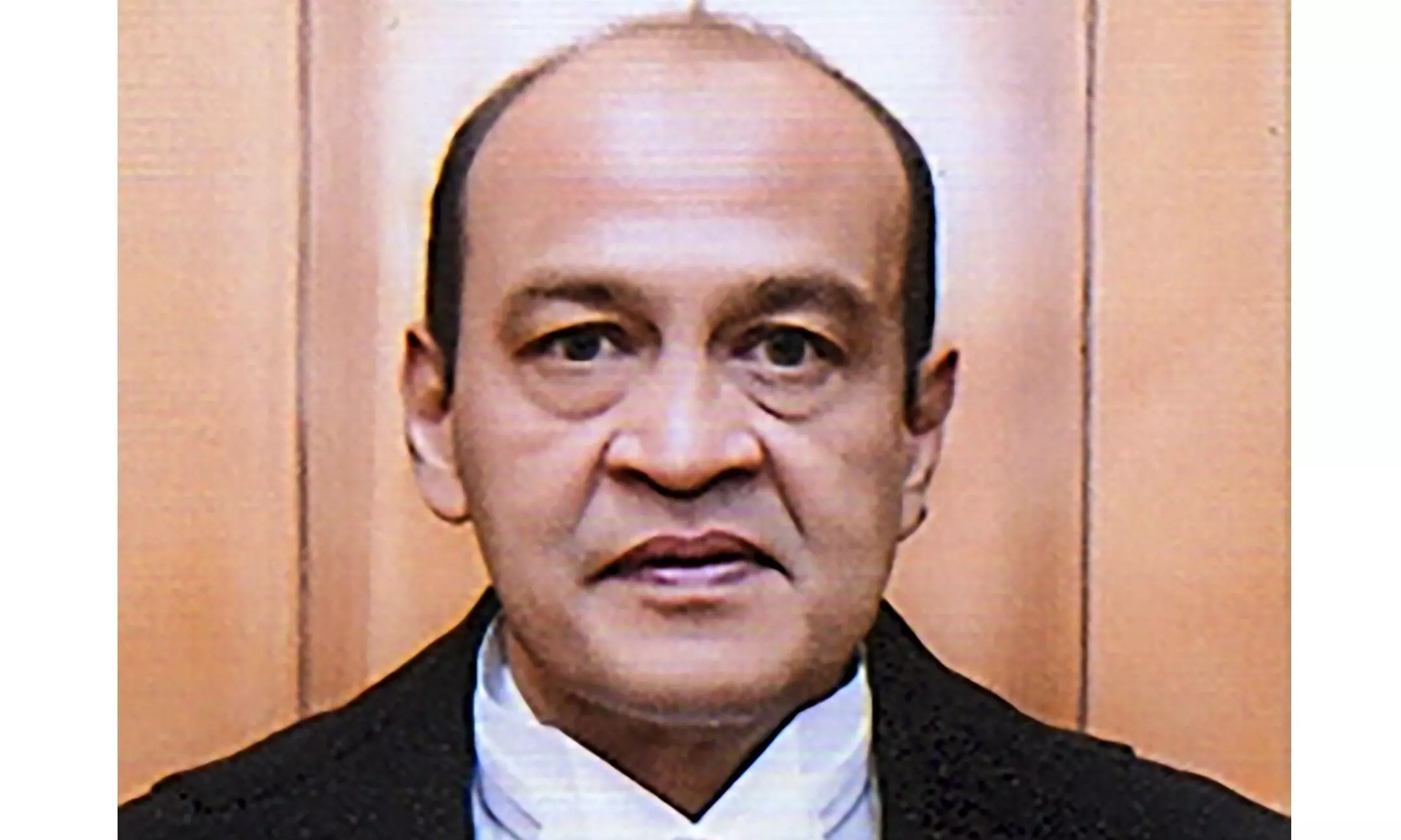
New Delhi: The Supreme Court on Wednesday reserved its verdict on the writ petition filed by Allahabad High Court judge Justice Yashwant Varma, who is challenging the in-house inquiry report that indicted him in the discovery of a large stash of cash at his official Delhi residence and the CJI’s recommendation for his removal.
The apex court told Justice Varma that his conduct “did not inspire confidence” and asked why he approached the top court only after the in-house committee found him guilty of misconduct in the cash discovery matter.
However, the court agreed with Justice Varma’s submission that the video of burnt wads of currency notes found at his residence should not have been uploaded on the Supreme Court website. It clarified that any impeachment proceedings would be conducted independently in Parliament, without reference to the in-house report.
A bench of Justices Dipankar Datta and A.G. Masih was hearing Justice Varma’s plea seeking quashing of the in-house panel’s report. That panel had found him guilty of misconduct over the discovery of a significant cache of burnt cash during his tenure as a Delhi High Court judge. The petition was filed anonymously under the title “XXX v. Union of India.”
The bench questioned why Justice Varma appeared before the in-house inquiry committee without challenging its jurisdiction then and there, and why he did not approach the Supreme Court earlier. It noted that the in-house process, established in 1999, gives the Chief Justice of India (CJI) duties beyond those of a mere “post office.” Justice Datta elaborated that, if material regarding judicial misconduct reaches the CJI, his duty is merely to inform the President and the Prime Minister. Should the misconduct warrant action, the CJI has the power to act on earlier Supreme Court decisions affirming that authority.
Senior Advocate Kapil Sibal, appearing for Justice Varma, referred to Articles 124 and 218 of the Constitution, arguing that they prescribe a comprehensive procedure for the removal of judges under the Judges (Inquiry) Act, 1968, and that any parallel or extra-constitutional mechanism is unconstitutional. He contended that the in-house inquiry lacks the safeguards of the Judges (Inquiry) Act, such as strict evidence standards and cross-examination of witnesses, and that the CJI’s recommendation for removal “sounds the death knell” for a judge and sets a dangerous precedent.
Justice Datta countered that three Supreme Court judgments have reaffirmed the in-house procedure since its inception and explained that its origins lie in judgments delivered by the Court itself.
When asked what relief Justice Varma sought, Sibal said he wanted a declaration that the CJI’s recommendation for removal was “non-est” (non existent) and unconstitutional. Justice Datta replied that such relief could not halt the proceedings at this stage, noting that Parliament retains independent authority to consider impeachment motions and appoint inquiry committees, whose members, of “high calibre”, would not be influenced by a preliminary in-house report.
On the question of delay in approaching the Supreme Court, Sibal argued that the video’s publication on the Court’s website had already damaged Justice Varma’s reputation. Justice Datta agreed that the upload “should not have been done,” but reiterated that any procedural lapse does not affect Parliament’s power to act against a judge.
In an unprecedented move on March 22, the Supreme Court had uploaded the in-house inquiry report, complete with photos and videos of the cash discovered during a firefighting operation at Justice Varma’s residence on Holi night, March 14, on its website. Justice Datta remarked that the committee’s report is preliminary and cannot dictate future proceedings, dismissing reliance on media reports.
The bench also questioned advocate Mathews J. Nedumpara, who had filed a separate petition seeking FIR registration against Justice Varma, asking whether he had approached the police with a formal complaint before seeking the FIR. It reserved its order on Nedumpara’s petition as well.Supreme Court, Justice Yashwant Varma
