Odisha Targets $500-billion Economy By 2036, Bets On Diversified Industrial Growth

Across the broader portfolio of projects under the new government, 151 projects involving Rs 3,11,722 crore, with an employment potential of 2,40,697, had reached the groundbreaking or inauguration stage by September 2026
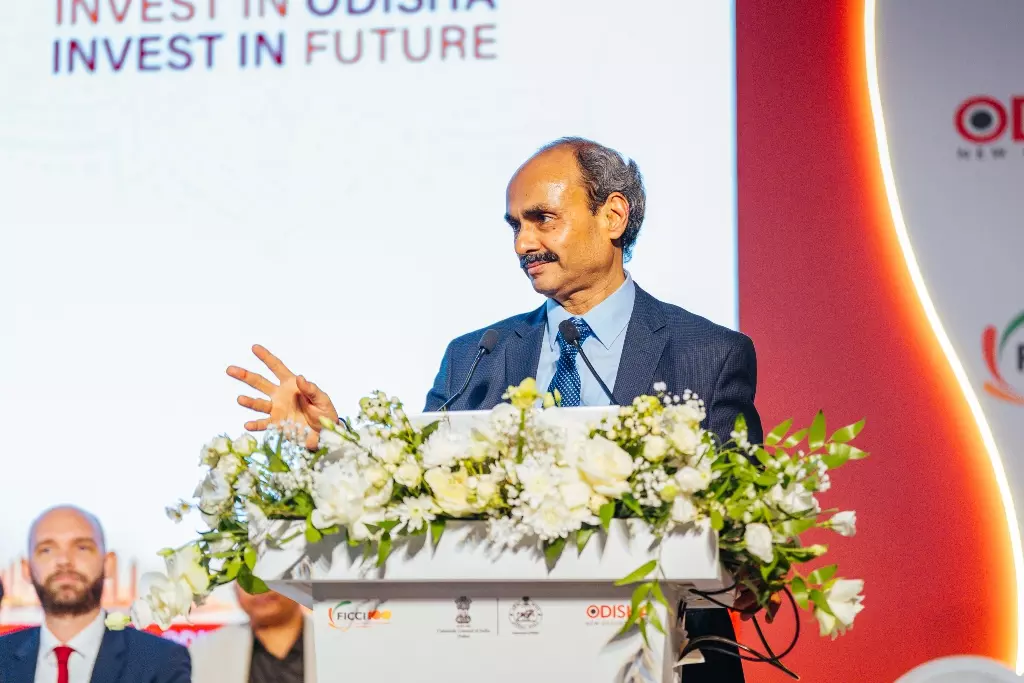
Bhubaneswar: Odisha is accelerating its industrial expansion beyond mining and metals, with a focus on data centres, semiconductors, artificial intelligence, green energy and advanced manufacturing, as the state targets a $500-billion economy by 2036.
Hemant Sharma, Additional Chief Secretary to the state government in charge of Industries, Home, and Information and Public Relations, said the government was prioritising the conversion of investment commitments into operational projects, employment generation and greater value addition within Odisha.
In 2025-26, the government approved 234 projects involving investments of Rs 4,63,596 crore, with an estimated employment potential of 2,46,337. Of these, 85 projects reached the groundbreaking stage and 21 were inaugurated, taking the total to 106 projects involving Rs 2,17,709 crore and an employment potential of 1,57,964, Sharma said in an interview with The Asian Age and Deccan Chronicle.
Across the broader portfolio of projects under the new government, 151 projects involving Rs 3,11,722 crore, with an employment potential of 2,40,697, had reached the groundbreaking or inauguration stage by September 2026.
The state is also seeking to strengthen its position in emerging technology sectors. Four recently approved IT, IT-enabled services and data-centre projects involve investments of approximately Rs 1.43 lakh crore, Sharma said, emphasising the need for reliable power, land, water, digital connectivity and skilled manpower to support their implementation.
While mining and metals will remain central to Odisha’s industrial economy, the government wants to expand downstream manufacturing, critical minerals processing, rare-earth-based products and advanced materials to retain a larger share of the value generated from the state’s natural resources.
Sharma said the government was pursuing a dual employment strategy by attracting capital-intensive technology projects while promoting labour-intensive sectors such as textiles, food processing, tourism, downstream manufacturing and micro, small and medium enterprises (MSMEs).
The government also aims to spread industrial growth beyond established manufacturing centres. The latest High-Level Clearance Authority (HLCA) approvals covered 27 projects across 15 districts, he said, highlighting opportunities in renewable energy, agro-processing, forest-based products, tourism and local supply chains.
Addressing concerns over land acquisition and environmental sustainability, Sharma said industrial development must comply with environmental regulations and rehabilitation requirements while creating tangible economic opportunities for local communities.
He said policy reforms, coordinated clearances and improved project facilitation would help Odisha attract long-term investments. The broader objective, he added, was to emerge as a value-added manufacturing and export hub while ensuring that economic growth translates into better jobs, higher incomes and balanced regional development.