Security forces raze home as probe expands into major terror network
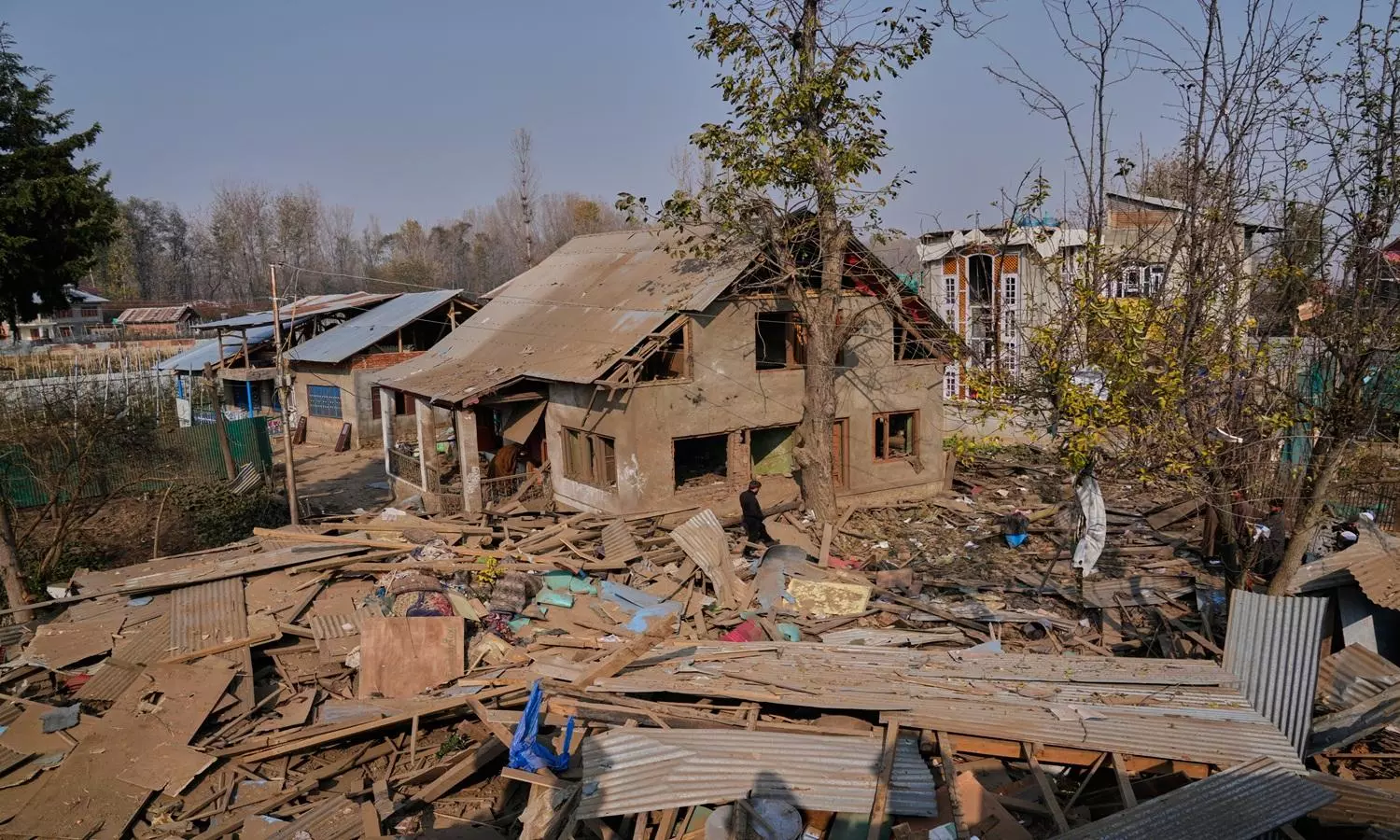
Srinagar: Security forces demolished the family house of Dr. Muhammad Umar Nabi, the prime accused in the deadly Red Fort blast in Delhi, during a controlled operation in the Koil area of Kashmir Valley's southern Pulwama district on the intervening night of Thursday and Friday, officials here confirmed.
The demolition was executed at around 2.3 am as part of the ongoing probe into the explosion that rocked the national capital earlier this week, claiming at least 13 lives and injuring several others.
Dr. Umar Nabi, identified as the driver of the explosive-laden Hyundai i20 car, was behind the wheel when the vehicle detonated near the iconic Red Fort on Monday night.
As per officials, investigators confirmed his identity through DNA evidence. The samples recovered from the blast site matched those provided by his mother in Pulwama, they said.
Official sources stated that the house was razed using controlled explosions to ensure safety and precision during the nighttime operation. “The action underscores authorities' resolve to dismantle support networks linked to the attack,” the sources said.
Ruling National Conference MP from Srinagar, Aga Syed Ruhullah Mehdi, condemned the demolition as collective punishment. His office in a post on ‘X’ quoted him as saying, “Demolishing a home won’t deliver ‘punishment’ it only inflicts collective suffering. Making an entire family homeless during the harsh winter of Kashmir without evidence/court order or any law linking them to the incident is an act of cruelty. It doesn’t bring justice to the innocent lives that we lost in the terror attack, and it doesn’t achieve the ends of justice”. He added, “Hold the actual perpetrators accountable through lawful investigation. Mass detentions, coercive interrogations, and illegal demolitions will not bring peace, they will drag Kashmir back by decades.”
On Thursday, J&K Police’s Counter-Intelligence Wing (CIK) raided 16 locations across Kashmir Valley in the probe into the November 10 car blast. Sixteen persons were detained for questioning and mobile phones, laptops, pen drives, SIM cards, and other devices were seized for forensic examination.
Earlier this week, police announced a major breakthrough, saying a 15-day inter-state operation with Haryana, Uttar Pradesh, and central agencies dismantled a Jaish-e-Mohammad and Ansar Ghazwat-ul-Hind (AGuH), an ISIS affiliate operating in India, transnational network. Eight high-value operatives—including three doctors—were arrested and 2,900 kg of explosives and sophisticated weapons recovered.
Dubbed a “white-collar terror ecosystem,” the module used professional and academic networks to fund and sustain terror under a respectable facade. It is directly linked to the Delhi blast, now under NIA investigation, the police said and added that Thursday’s raids, led by CIK on CID intelligence, targeted JeM operatives and overground workers (OGWs). A senior officer said, “With the JeM-AGuH probe under CID, we struck 16 sites today. Deeper operations continue to dismantle this network and expose the full conspiracy.”
Meanwhile, Kashmir’s chief Muslims cleric and chairman of Hurriyat Conference Mirwaiz Umar Farooq in his post Friday post-sermon customary speech from the pulpit of Srinagar’s historic Grand Mosque condemning the Delhi car blast as "very sad and painful," shocking humanity.
He, however, also lamented the media's hasty exploitation via "inside sources," fuelling narratives that immediately link such acts to a specific religion or community, criminalising them. “This makes Kashmiri youth studying or working across India overnight suspects, fearing for safety, and causes anxiety here,” he said, reiterating his and his organisations' consistent condemnation of violence and terror.
“Kashmiris empathise most with victims, having endured decades of pain. No cause or religion justifies such acts in Delhi,” he said, adding, “Dialogue—respectful talking and listening—is the best way to resolve issues and build bridges.”
He said that the Jama Masjid pulpit obliges him to speak for Kashmiris, “who feel distressed and disempowered”. He further stated, “The core issue persists; even constitutional autonomy was revoked in August 2019, downgrading J&K to a Union Territory, stripping land and job rights. This triggered fears of demographic change, curtailed freedoms, surveillance, arbitrary dismissals, property attachments, raids, arrests, rising youth unemployment, shrinking jobs post-35A removal, and discriminatory reservations—breeding hopelessness and resentment”.
He urged authorities to shift from a security and law-and-order lens to Atal Behari Vajpayee's "dayira of insaniyat and jamhooriyat (the ambit of humanity and democracy).” He asserted, “They may heed or ignore, for Kashmiris, hope and faith in the Almighty remain our imaan”.