Omar Abdullah Calls on PM Modi to Expedite Restoration of Statehood
Srinagar: In a significant announcement, Jammu and Kashmir Chief Minister Omar Abdullah on Thursday declared the full revival of the ‘Darbar Move,’ a 150-year-old tradition of biannually shifting the government’s administrative base between Srinagar, the summer capital, and Jammu, the winter capital.
The decision aims to preserve Jammu’s distinct identity and strengthen the cultural and economic ties between the two regions of the scenic Himalayan region.
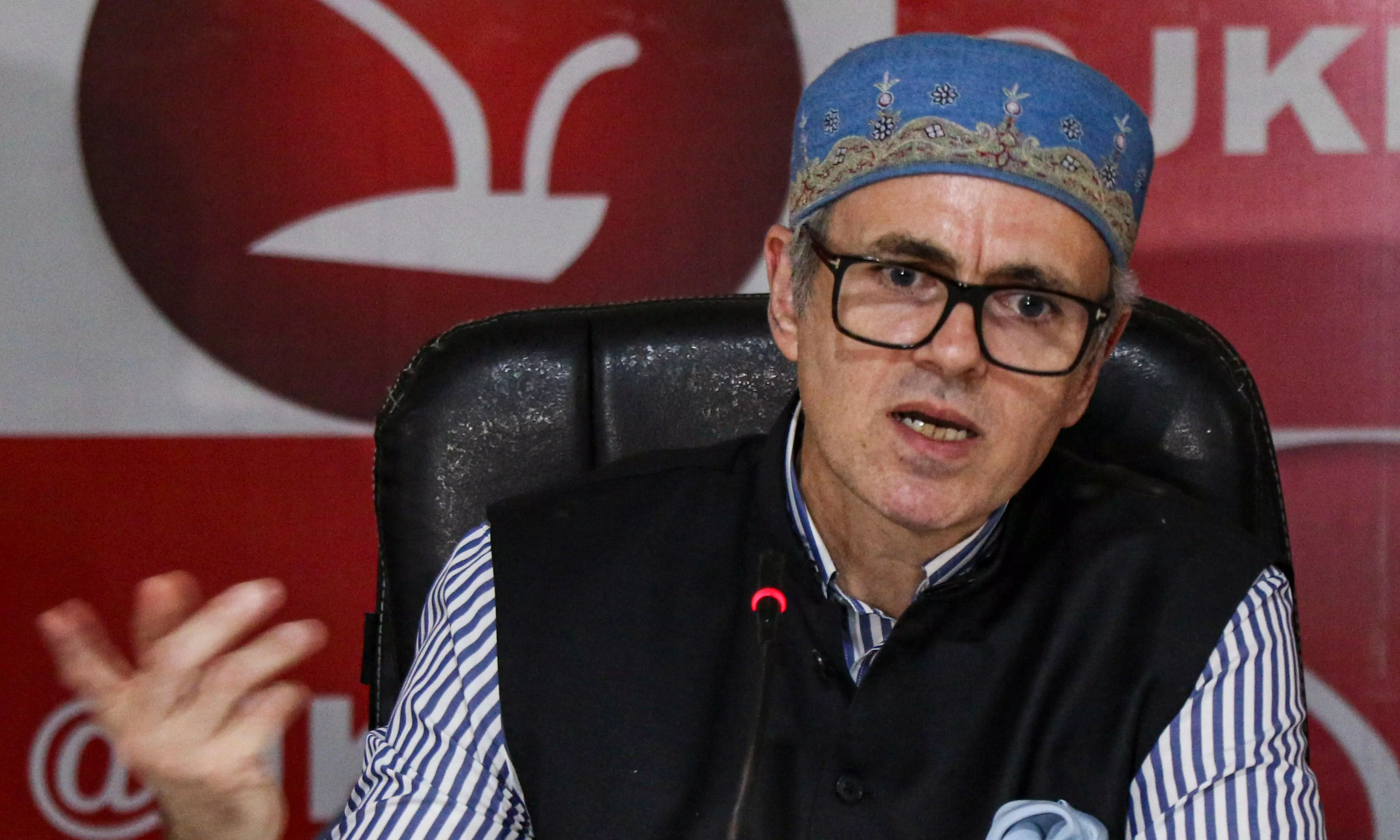
Speaking at a press conference marking the completion of his first year in office, Abdullah confirmed that the Cabinet, under his leadership, had approved the restoration of this historic practice in September. “The proposal was forwarded to the Lieutenant Governor and has received approval. We are working to reinstate the Darbar Move at the earliest,” he stated.
The Darbar Move, initiated by Dogra Maharaja Ranbir Singh in the 19th century, was designed with strategic and climatic considerations in mind. The practice facilitated governance by relocating the administrative machinery to Jammu during the harsh winter months when Srinagar was often snowbound and inaccessible. Conversely, the government would return to Srinagar in May for the summer. Beyond its administrative purpose, the Darbar Move served as a vital bridge between the diverse ethnic communities of Jammu and Kashmir Valley, fostering social and cultural integration.
The biannual migration of thousands of government employees and their families to Jammu significantly boosted the region’s economy, invigorating local businesses in markets during the winter season. However, the tradition was discontinued in June 2021 by Lieutenant Governor Manoj Sinha following the Centre’s decision to revoke Jammu and Kashmir’s special status and reorganise the erstwhile state into two Union Territories in 2019. Sinha cited the high cost of the practice, estimated at Rs 200 crore annually, and argued that the transition to e-governance and e-offices had rendered the physical relocation unnecessary.
He also stated that both the Jammu and Srinagar secretariats could function effectively year-round, eliminating the need for the Darbar Move.
The decision sparked widespread criticism, particularly from Jammu’s business community, which relied heavily on the economic activity generated by the influx of government employees.
Upon assuming office as Chief Minister of the Union Territory in 2024, Abdullah emphasised the cultural and economic significance of the Darbar Move. Speaking at an event hosted by the Jammu Chamber of Commerce and Industry, he had remarked, “The Darbar Move was the hallmark of Jammu city. For six months, people from Srinagar would work here, creating a vibrant atmosphere and fostering interaction between communities on both sides of the mountains.” He had pledged to restore the practice, acknowledging that time constraints had prevented its revival in 2024 but reaffirming his government’s commitment to bringing it back.
The restoration of the Darbar Move was a key promise made by the National Conference (NC) and its alliance partner, the Congress, during their campaign for the 2024 J&K Assembly elections. The pledge resonated strongly with the people of Jammu, who viewed the discontinuation of the practice as a diminishment of their region’s importance.
Addressing these sentiments, Abdullah reiterated, “Jammu has its own unique significance, and we will ensure that its distinct identity is preserved.”
During Thursday’s press conference, the Chief Minister also called on Prime Minister Narendra Modi and his cabinet to expedite the restoration of J&K's’ statehood, a promise made by the Centre following the 2019 reorganisation. “Since the day our government was sworn in, we have worked tirelessly for the people. We had hoped that the Centre would fulfill its commitment to restore statehood within our first year, but that has not happened,” Abdullah said. He urged the Central government to act swiftly, emphasising that the people of J&K deserved the fulfillment of this pledge. “We are hopeful that these promises will be honoured without resorting to conflict or unrest,” he added, stressing that statehood restoration should not be contingent on the political fortunes of any single party, including the Bharatiya Janata Party (BJP).
Responding to a question about the BJP’s electoral defeat in J&K, Abdullah clarified that the Centre’s commitment to statehood was not conditional on the BJP’s success. “The Centre promised delimitation, elections, and then statehood—there were no ifs or buts. Denying the people their right to statehood because of the BJP’s loss would be unfortunate,” he said. He also firmly stated that his government would not allow the BJP to come to power, rejecting any notion of including them in the government as a prerequisite for statehood restoration.
Reflecting on his government’s achievements over the past year, Abdullah highlighted the regularisation of government employees as a top priority. “This is a historic step, and we are committed to seeing it through,” he said. Notably, the Education Department recently regularized 860 Contingent Paid Workers (CPWs), who previously worked for minimal wages, marking a significant step toward fulfilling the government’s promises.
Abdullah acknowledged the challenges of governing a Union Territory under the current circumstances but expressed optimism about future progress. “No government can fulfill all its promises in just one year. We have a five-year mandate, and the people will judge us based on our performance at the end of that period,” he said.
On the issue of statehood, Abdullah reiterated that his government would continue to advocate for its restoration, viewing it as a solution to many of the region’s challenges. He emphasised a non-confrontational approach, stating, “We believe these issues can be resolved through dialogue and cooperation, not through threats or violence.”
The Chief Minister also addressed other pressing issues, including the recent floods in J&K. He noted that the government had provided relief through the State Disaster Response Fund (SDRF) and the Chief Minister’s Relief Fund, adhering to established guidelines. The Centre, he added, had sent teams to assess the damage, which included over 300 damaged roads, collapsed bridges, and losses to crops and homes. Abdullah expressed hope for a comprehensive central assistance package to aid recovery efforts. Additionally, the government is working to provide five marlas of land to families who lost both their homes and land in the floods, with further assistance planned for reconstruction, he said.
On the issue of reservations, Abdullah announced that the Cabinet Sub-Committee had submitted its final report, which was approved during the previous day’s cabinet meeting. The Social Welfare Department has been tasked with preparing a cabinet memo, which will be sent to the Lt. Governor for approval within the next few days.
Addressing the alliance with Congress, Abdullah dismissed rumours of discord, confirming that discussions were ongoing regarding by-elections for the Nagrota and Budgam Assembly seats. He expressed willingness to allocate the Nagrota seat to Congress if they presented a strong candidate.
Regarding support from the People’s Democratic Party (PDP) for the NC’s candidate in the Rajya Sabha elections, Abdullah noted that NC president Farooq Abdullah had sought PDP leader Mehbooba Mufti’s support to counter the BJP. He clarified that decisions on legislative bills rest with the Assembly Speaker, not external conditions.
The Chief Minister acknowledged the role of bureaucrats in the government’s functioning, praising those who worked diligently while noting that not all officers shared the same commitment. He also addressed the need for proactive measures against natural disasters, such as cloudbursts, by seeking central assistance for a survey to identify vulnerable areas based on topography and climate.