39 Naga Ancestral Remains Return Home After Six-Year Repatriation Process

27 Nov 2026 7:02 PM IST
The remains had been taken from the Naga homeland during the British colonial period, largely between 1910 and 1940, by colonial administrators and collectors, and had remained in the museum for decades.
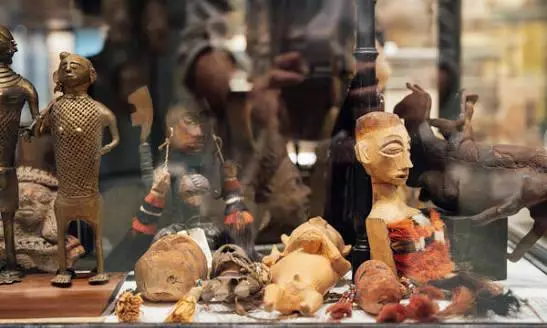
The repatriation process began in 2020 after the Pitt Rivers Museum removed human remains from public display and initiated discussions on their future care and return. (Image/X)
Dimapur: Thirty-nine ancestral human remains of Nagas, repatriated from the Pitt Rivers Museum at the University of Oxford in the United Kingdom, arrived in Nagaland on Friday afternoon.
The remains were brought to Dimapur from New Delhi, where they had arrived from the UK on November 25, marking the culmination of a six-year-long effort to bring the remains of the ancestors back to their homeland.
On arrival at Dimapur airport, the remains were received by representatives of various Naga tribes led by Naga Tribes Hoho (NTH) and the Forum for Naga Reconciliation (FNR), as well as other non-Naga communities extending a rousing welcome to the remains of the Naga ancestors that had been kept in a foreign country for more than a century.
A prayer service was held outside the airport after which they proceeded to Kohima for further rites.
The repatriation process began in 2020 after the Pitt Rivers Museum removed human remains from public display and initiated discussions on their future care and return.
The Forum for Naga Reconciliation (FNR) played a key role in facilitating dialogue between the museum and Naga communities.
In 2021, the FNR constituted the Recover, Restore and Decolonise (RRaD) team to coordinate the initiative through community engagement, participatory research, historical documentation and public awareness.
The process involved Naga tribal Hohos, elders, churches, civil society organisations and communities across the Naga homeland.
A series of consultations and dialogues were organised to establish a collective Naga position on the return and dignified burial of the ancestral remains.
A Naga delegation comprising tribal leaders and representatives also visited Oxford in June 2025 to formally advance the repatriation process.
In June 2025, a unanimous inter-tribal declaration, known as the Naga-Oxford Declaration, was presented, affirming the commitment to bring the ancestors home and provide them a common memorial resting place as a symbol of healing, reconciliation and Naga unity.
The University of Oxford Council approved the return of 39 ancestral human remains in July 2026.
The formal transfer of custodianship to the Naga people through the FNR and Naga Tribe Hoho took place at the Pitt Rivers Museum on November 9.
The remains had been taken from the Naga homeland during the British colonial period, largely between 1910 and 1940, by colonial administrators and collectors, and had remained in the museum for decades.
The return is being regarded as a significant moment of historical remembrance, restoration of ancestral dignity and reconciliation for the Naga people.
A public homecoming programme will be held at the NBCC Convention Centre, Kohima, on November 28 at noon.
Members of the public can pay their respects, offer prayers and lay wreaths at the venue from 9 am on November 29.
The final burial rites will be held at Naga Solidarity Park, Kohima, on November 30 at 2 pm.
( Source : PTI )
Next Story