NIA Reportedly Gains Crucial Leads As Prime Accused’s Remand Ends In Sundargarh Landmine Blast Case

National Investigation Agency (NIA) has reportedly obtained crucial inputs in connection with the deadly landmine blast in Odisha’s Sundargarh district, following the completion of the three-day custodial interrogation of the prime accused, Rupu Singh, on Thursday.
Bhubaneswar: The National Investigation Agency (NIA) has reportedly obtained crucial inputs in connection with the deadly landmine blast in Odisha’s Sundargarh district, following the completion of the three-day custodial interrogation of the prime accused, Rupu Singh, on Thursday.
Singh, arrested on September 9, is alleged to have acted as a key conduit for Maoist operatives, supplying them with strategic information in exchange for money. According to sources, his interrogation has helped investigators identify a wider network of local sympathisers and informants who may have provided logistical and intelligence support to the banned outfit.
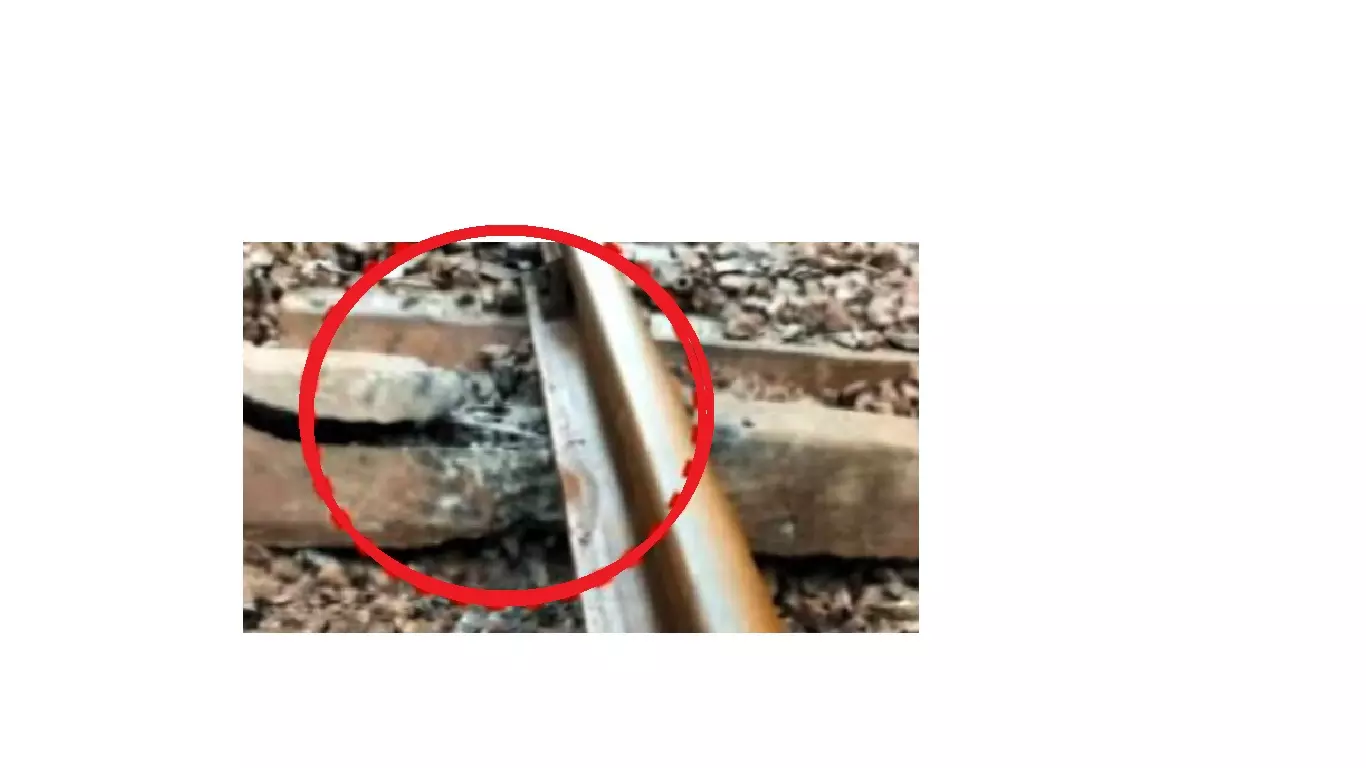
The case pertains to a powerful improvised explosive device (IED) explosion triggered by Maoists in August along the Bimalagarh railway section, between Karampada in Jharkhand and Renjeda in Odisha. The blast claimed the life of a railway employee and left another grievously injured, besides causing significant damage to railway infrastructure.
Investigators believe the attack was carried out to sabotage railway movement and disrupt anti-Maoist operations in the mineral-rich border region. The cross-border nature of the incident has prompted a coordinated probe between Odisha, Jharkhand, and central agencies.
In the aftermath of the explosion, police recovered posters and leaflets from Banka village under K. Balang police limits, purportedly issued by the Eastern Regional Bureau of the CPI (Maoist) and its Chotanagpur Divisional Committee. The materials indicated that the extremists had looted explosives from nearby mining sites to execute the blast and condemned ongoing anti-Maoist operations such as Operation Kagar.
The NIA, which took over the investigation from local police and registered a case at its Bhubaneswar branch, has since intensified its efforts to trace the financing and logistical chain behind the attack. Officials said Singh’s remand yielded “valuable intelligence” on both the planning of the landmine blast and the role of civilian collaborators aiding the Maoists.
An NIA team has now set up a temporary base in Jharkhand to pursue fresh leads. Sources said the agency is tracking a senior Maoist leader and at least seven associates suspected to have been directly involved in orchestrating the explosion.
Security experts view the Sundargarh blast as a reminder of the continued threat from Maoist groups along the Odisha–Jharkhand–Chhattisgarh corridor, despite a visible decline in insurgent activity in recent years. The NIA’s findings, officials say, could help uncover underground support systems that allow Maoists to regroup and strike in sensitive border zones.
As the investigation deepens, central and state security agencies are expected to enhance joint surveillance and intelligence coordination across the Red Corridor.