Government sources on Wednesday confirmed that India has decided not to participate in the Neutral Expert proceedings scheduled to be held in Vienna, Austria, from November 17 to 21, as the Indus Waters Treaty (IWT) of 1960 with Pakistan remains in abeyance.
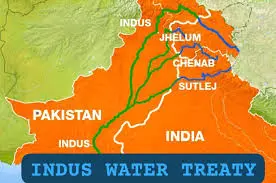
Indus Waters Treaty (IWT)
New Delhi: Government sources on Wednesday confirmed that India has decided not to participate in the Neutral Expert proceedings scheduled to be held in Vienna, Austria, from November 17 to 21, as the Indus Waters Treaty (IWT) of 1960 with Pakistan remains in abeyance.
Following the Pahalgam terror attack, India had in April 2025 announced that, “in exercise of its rights as a sovereign nation under international law,” it was placing the Indus Waters Treaty in abeyance “until Pakistan credibly and irrevocably abjures its support for cross-border terrorism.”
New Delhi had further stated that, “until such time that the Treaty remains in abeyance, India is no longer bound to perform any of its obligations under it.”
Despite India’s decision, Pakistan announced on Wednesday that it would participate in the Vienna proceedings, according to reports.
The two countries have been at odds over the Kishenganga and Ratle hydroelectric projects under the IWT. Earlier this year, India welcomed the decision of the World Bank-appointed Neutral Expert to “uphold his own competence” in addressing seven differences between the two nations related to these projects.
At the same time, India reiterated that it “does not recognise or participate in the illegally constituted Court of Arbitration proceedings”, which were simultaneously initiated by the World Bank.
New Delhi has consistently maintained that “the Neutral Expert alone has the competence under the Treaty to decide such differences.” However, since the Treaty itself has been suspended, India said it will not participate in the current proceedings before the Neutral Expert.
The Indus Waters Treaty, signed in 1960 by Prime Minister Jawaharlal Nehru and Pakistan’s President Ayub Khan, governs the sharing of water from six rivers, Beas, Ravi, Sutlej, Indus, Chenab, and Jhelum. Under the agreement, the waters of the eastern rivers (Ravi, Beas, Sutlej) were allocated to India, while those of the western rivers (Indus, Jhelum, Chenab) were reserved for Pakistan, except for limited domestic and non-consumptive use by India.
Pakistan has frequently alleged that it does not receive sufficient water and has sought international arbitration in multiple instances.
In June 2025, India categorically rejected a “supplemental award” by the World Bank-constituted Court of Arbitration, which claimed competence to hear disputes over the Kishenganga and Ratle projects in Jammu and Kashmir.
At that time, India said: “The illegal Court of Arbitration, purportedly constituted under the Indus Waters Treaty 1960, albeit in brazen violation of it, has issued what it calls a ‘supplemental award’ on its competence concerning the Kishenganga and Ratle hydroelectric projects in the Indian Union Territory of Jammu and Kashmir.”
New Delhi added: “This latest charade at Pakistan’s behest is yet another desperate attempt to deflect attention from its role as the global epicenter of terrorism. Pakistan’s resort to this fabricated arbitration mechanism reflects its decades-long pattern of manipulating international forums. India has never recognised the existence in law of this so-called Court of Arbitration, and any proceedings or awards by it are illegal and void.”
( Source : Asian Age )

Next Story