The celebrated Japanese author of the award-winning Days at the Morisaki Bookshop spoke to this writer at KLF 2026 in a conversation facilitated by Lynette Dias
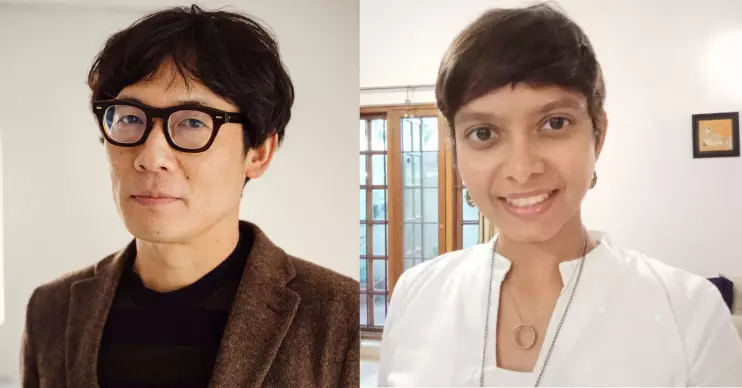
Where did you go to school? What did you study and how have your studies helped or hindered in the process of your becoming a writer?
I went to film school. I had been studying filmmaking because, well, since a young age I had this impulse to create things. But while I was doing so, I realised that I really want to talk about the inner lives of human beings and their emotional states. Now that would be difficult to do through films and so I decided to try writing a novel so that the words move directly onto the page from my heart. Yet studying filmmaking proved to be helpful in writing my novels because in filmmaking we also studied how to create scenarios and write scenes in the script. So, when I am writing a scene in my novel, it comes to my mind like a movie playing out in front of my eyes.
Your stories are so beautifully dialogue-driven. I am curious to know in this context, whether you plot them all at once, at least in terms of the general outline, or do you build the storyline as you go along? Your dialogues are so detailed; is it possible for you right at the beginning to know the end?
I am actually very deliberate about dialogues in my novel and the way we come to know about the characters is via the dialogue. So, to me dialogue is important because it’s what drives the story forward and also decides the tempo of the story as well as how the story will go. But instead of having a single finishing point and wanting to reach there via dialogue, it's more like trying to go with the flow of the dialogue and figure out what this person is thinking and what this person is feeling while they are in dialogue with another person. It's almost as if I am sitting in one corner of the cafe and observing these people and listening to them talk and trying to figure out what they are thinking and feeling and then write about it. And as and when that starts forming into a picture, it also starts becoming a story in the novel.
What’s with this new trend of cafe and bookstore stories in Japan?
I don’t really know why this is a trend and why there is a demand for it, but there are some authors who want to write about these spaces because they like such spaces and have been inhabiting such spaces and that's why their stories grow from there. But there are also authors unfortunately writing about it just because it is a trend. Also, I have a rule which is not to read contemporary writers of my own genre. That’s why I can be indifferent to this phenomenon, I'd say it is more on the marketing side of things.
Which Japanese author would you recommend to your readers?
I only read very selective contemporary fiction and most of the fiction that I have read is of older Japanese authors. I have introduced quite a few of them in my books [Kotaro Takamura, Kinoshita Naoe, Hyakken Uchida, others] and those are the authors I would recommend to my readers. Some of them are available in translation while some aren't but the pull of these authors is that there are certain human experiences and emotions that don't change no matter what era we live in and those are very beautifully presented in their works.
Many people around the world believe that the Japanese are too disciplined and reticent to the point of being secretive, but your books are about the art of communication and the importance of facing your own emotions in order to communicate them. So, are your stories a deliberate attempt on your part to dispel this false notion?
The Japanese don’t really tell you how they feel as and when they meet you. But as they slowly develop a relationship with you, what they really think and what they really feel gradually come to the fore. So that’s the kind of communication I want to pull out of my characters; when they meet for the first time, they obviously don’t say much; it is all about being polite and fair to one another; but as the conversations progress and the relationship deepens, their feelings become relevant and they show. So that’s the sort of flow I like to write where the thought process of the character is slowly being drawn out of him and expressed.
Do you have more female or male readers?
A lot of women come over and talk to me about how the books made them feel; the men don’t usually do that a lot. But from the communications I have received so far, I feel that women are about 60 per cent of my readership and men are about 40 per cent of it.
In today's age of AI and memes and Internet wisdom, what do you think is the role of a writer?
It’s very convenient to have AI and the Internet because it helps a lot of people and knowing a lot of things, but also there is a bit of an overwhelm in both cases, and it somehow corrupts the human experience and you start to feel that if you are on the Internet or your work is on the Internet 24/7, it really does tire us out as humans in some ways, and through my work as an author I want to keep a little distance from the Internet, so I don’t have a social media presence and I don’t want to have one either because I feel like being bombarded with information at all hours just takes something away from the human experience. And as a writer, I can do that, but many others cannot. So, through my work as an author, I want to show people that it is alright to sometimes slow down. And it’s okay to take some time to find yourself. I actually want to reach out and help people who feel overwhelmed by life’s demands.
