One also wonders if this might have worked better as a Netflix talk show: punchy, provocative. As a book, it meanders towards the end
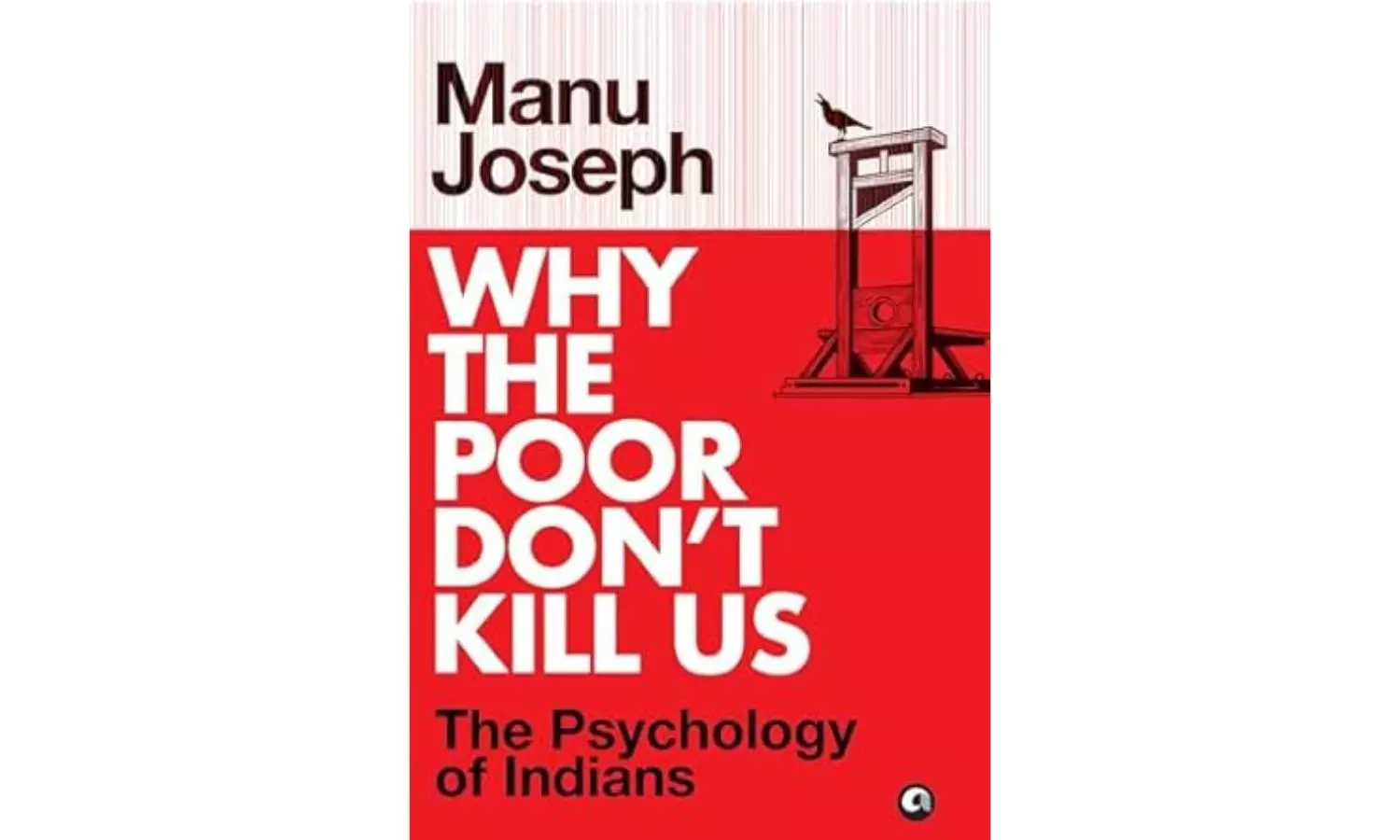
The question at the heart of Manu Joseph’s first nonfiction book — Why the Poor Don’t Kill Us: The Psychology of Indians — is not new. Ambedkar asked it in Annihilation of Caste, sociologists like Andre Béteille and Dipankar Gupta have explored it. Joseph posed the same question in a 2017 column.
Over 250 pages, Joseph offers sharp vignettes of hypocrisy and quiet despair, expanding his theory of India. His prose dazzles, though at times one wishes he was not so relentlessly clever. One also wonders if this might have worked better as a Netflix talk show: punchy, provocative. As a book, it meanders towards the end.
Joseph skewers privilege without romanticising poverty. He lives in a beautiful colony in Gurugram (erstwhile Gurgaon) that has broad, tree-lined pathways, parks with flower beds, and little green mounds. “An American with a mohawk teaches karate to teenaged girls; and some boys are so posh they cannot bowl… It is one of those places where Indians escape India. Yet, every morning India storms the gates.”
He goes on to say “When affluent Indians pay for a home or lifestyle, they do not pay for the value of the thing but for the promise that India cannot enter it, at least not easily.”
We journey with Joseph, the ‘insider-outsider’, through India’s gated spaces, inequality as backdrop, cleverness as compass.
Yet to reduce the book to clever writing alone would be unfair. There are moments of deep insight, flashes of feeling. Joseph’s observations on the psychological conditioning of poverty, the quiet dignity of domestic workers and elite guilt are poignant. The book gestures at caste, religion, and structural inequality, but rarely excavates them. It describes more than it analyses. Its satire sometimes slips into moralising, which feels oddly out of place in a work so committed to irony.
Joseph’s granular style, full of sly turns of phrase, makes familiar truths feel newly urgent. But when he declares that “a true pop culture is emerging that is unifying all the classes, except those who are westernised,” one is reminded of the current political leadership’s labelling of critics as the Khan Market Gang. Resistance to the mores of ‘New India’ does not only come from the “anglicised elite” — it also comes from Dalit thinkers, regional activists, and non-anglicised intellectuals. Posh Westernised folks also rail against their own. Joseph’s binary blurs caste, regional fault lines, and nuance. There is partial truth in what Joseph writes, but it is not the entire story.
Who is this book for? Certainly not the poor — they are too busy surviving. Not the middle class either — they are too busy aspiring. That leaves the lovers of the good life in what Joseph describes as “an archipelago of private islands,” the anglicised elite in gated complexes with flower beds, the very people Joseph skewers. Will they read it, nod knowingly, feel momentarily guilty, and then return to their salmon? The jury is out.
Meanwhile, read the book — for the wit, the wounds, and the weight of cleverness.
Why the Poor Don’t Kill Us: The Psychology of Indians
By Manu Joseph
Aleph
pp. 280; Rs 599
