Subtitled Gender Upturned Tales from Bengal, this unique volume attempts to do the same in the Bengali universe
Why should boys have all the fun? Posed succinctly by the slogan of the iconic Hero Honda Pleasure scooter ad, it's a question on the minds of all female children still today, even those raised in liberal homes because history and culture cannot be wished away. However, it is the girls from regressive and repressive environments who are worst hit by the lack of female role models. Many reconcile to having smaller lives; some others, like the Albanian burnnesha for instance, opt for becoming tomboys or transmen. To fill this lacuna of female heroes having the critical qualities of courage, integrity and intelligence, with the power to change the storyline, to actually make a difference, Angela Carter with her ten-story collection, The Bloody Chamber, started in 1979 the tradition of the feminist fairtytale.
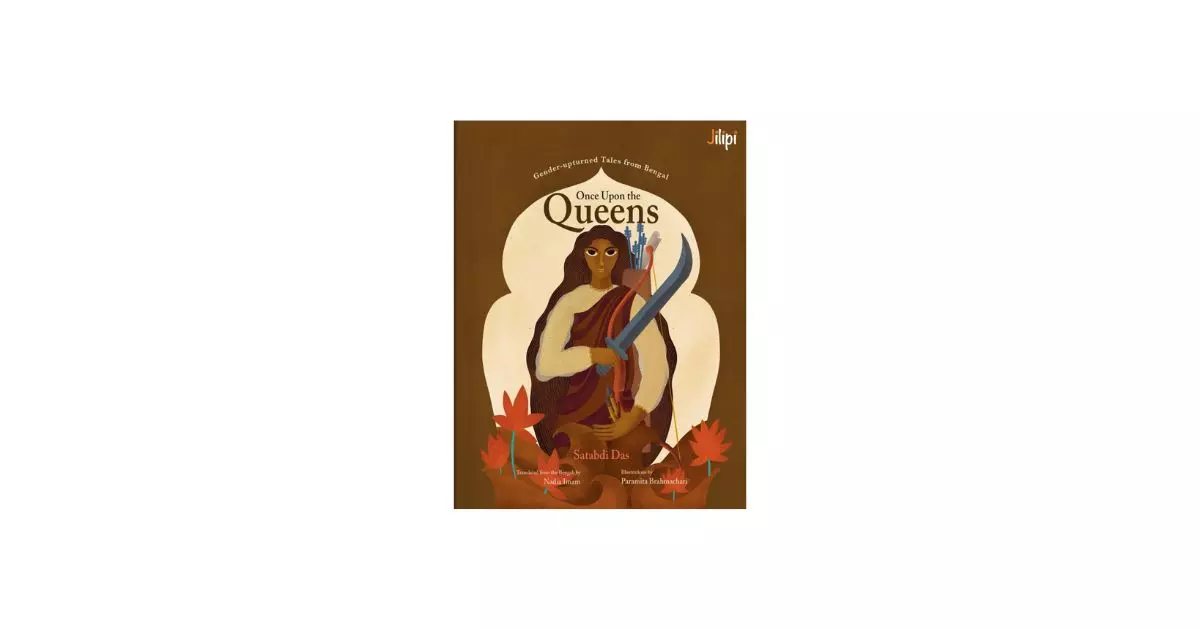
Subtitled Gender Upturned Tales from Bengal, this unique volume attempts to do the same in the Bengali universe. Picking ten well-loved pieces from the formidable Dakshinaranjan Mitra Majumder’s timeless Thakurmar Jhuli (published 1907) and Thakurdadar Jhuli (1909), the author retells them but switches up the roles and the perspectives so that the result is often a surprise. This, and the fairly enjoyable translation minus the few gremlins here and there, keep the reader turning the pages, wondering: Why does this story feel familiar? Aha. But wait. Does it have the same ending?
Eight of the ten stories have female protagonists. Das is at her skilful best in the character-driven ‘Shukhu and Dukhu’ where she successfully and sympathetically shows us the real persona of the debonair, dynamic, devil-may-care Shukhu who bends rules at will and is greedy for the good life but will not desert her friend. Shukhu indeed is the quintessential strong woman in disguise as the sociable, obedient, but also patriarchal, one in our daily lives. It makes this writer wonder: Are these stories for children only? For to fully parse them one needs the heft of experience. ‘The One and a Half Finger’ is another of her best satisfying narratives with nuances around inequality and poverty that is accessible to children; while teens will appreciate ‘The Sleeping Kingdom’ which starts with a princess, rather than the prince, seeking the permission of her parents to travel the world. Just as it is with the prince, the doting king at first refuses, but the twist arrives when: “’Hush, you,’ said the queen. ‘My father also spewed such nonsense and stopped me from exploring the world. Let her go!... Let the world be her school. Only then will she be fit to rule.’
The stories selected for this collection, originally titled Rani-Konye Kawtha are ‘Ghumonto Puri’, ‘Kalabotee’, ‘Knakonmala, Kanchonmala’, ‘Saat Bhai Champa’, ‘Neelkamal aar Laalkamal’, ‘Sonar Kaati, Rupar Kaati’, ‘Siyal Pondit’, ‘Dedh Angule’ and ‘Malanchomala’. Of these, the lush ‘Knakonmala, Kanchonmala’ and the gripping ‘Neelkamal aar Laalkamal’ do not have the same pay-off in the recreations. Perhaps, Das is guilty of too many good intentions. But her planning is ambitious, and her characters relatable and adventurous, and along the way, Paramita Brahmachari’s imaginative illustrations keep us company.
Once Upon the Queens
By Satabdi Das
The Antonym Collections
pp. 124; Rs 599
