While so far, there is no World War III declared, the number of wars and conflicts currently on only prove how much more dangerous life is all around the world
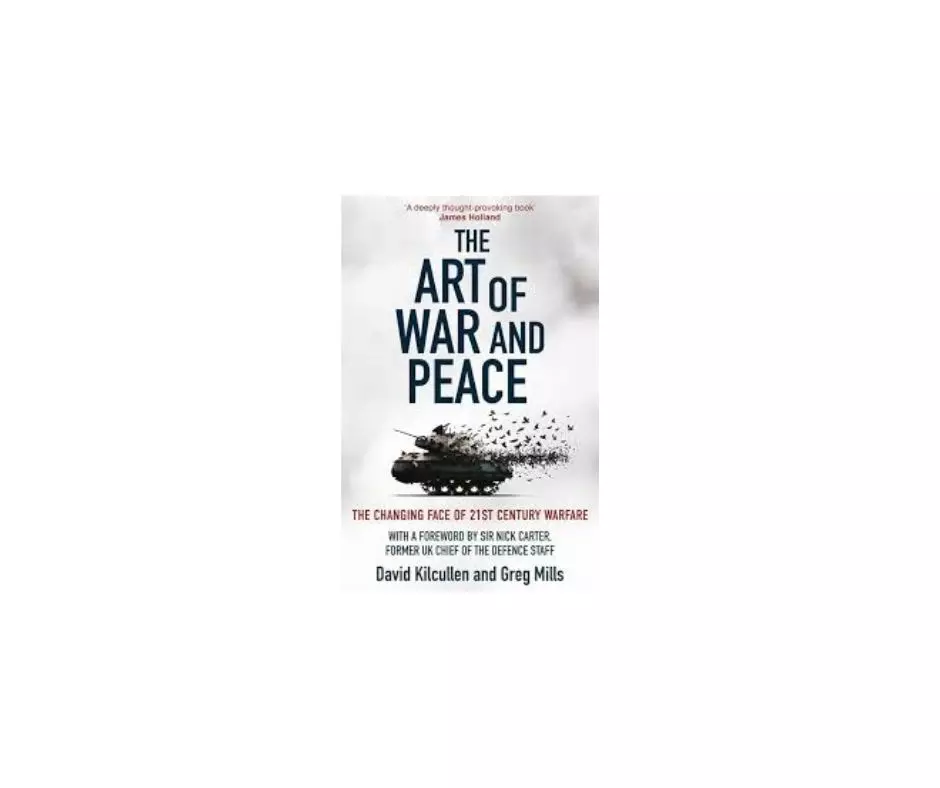
Written by David John Kilcullen, an Australian author, strategist, and counterinsurgency expert and Greg Mills, heading the Brenthurst Foundation, based in Johannesburg, South Africa (established in 2005 by the Oppenheimers, of whom J. Robert Oppenheimer is known as the “father of the atomic bomb”), who have been described as being well-versed in the theory and practice of modern conflict.
Preceded by two Forewords, the book comprises an Introduction titled A Pre-War World, and the four chapters, Three Wars, Three Questions, Three Themes; Bigger Wars; Smaller Wars and War and Peace. the Conclusion is titled Where Have All the Leaders Gone? and is followed by two Afterwords.
Based on conflict situations in Iraq, Congo, Somalia, East Timor, Columbia, Ethiopia, Afghanistan, Ukraine and Israel, the book also includes brief discussions related to China, Taiwan, North Korea, the US and its Nato and non-Nato allies and many other countries. Personalities, organisations, including the terrorist ones, and events are all woven together in an engaging theoretic narrative.
While so far, there is no World War III declared, the number of wars and conflicts currently on only prove how much more dangerous life is all around the world. Power play and terrorism have increased the chances or causes for war, widened the arena of conflicts and extended the periods of warfare. Other factors which have been added to make warfare more complex are technological progress which has made possible the use of deadly weapon systems from longer stand-off distances and the “weaponisation of economics”, i.e., the strategic use of economic tools, such as sanctions, tariffs and export controls, to achieve foreign policy and national security goals.
Yet another problem discussed in the book is that victory does not always mean an end of a conflict. While wars can end in stalemate, defeat, state collapse or mediation/negotiation, sanctions and control of supply chains are other forms of bullying without physical colonisation.
An evil of modern warfare is profit. Take the case of the Russia-Ukraine war, in which millions have been affected, but various industries, companies and countries have profited financially from the resulting shifts in global markets and increased military spending.
Another new kind of war without deploying troops on the ground and with no bullets and bombs was devised by the Chinese Communist Party as a part of its long-standing programme of biological warfare. Covid-19 was leaked out from the Wuhan Institute of Virology causing a global pandemic, during which the People’s Liberation Army attacked and killed 20 Indian Army personnel and then lost maybe over a hundred of their own when Indian troops retaliated.
While the authors have analysed the nature of modern war, the book is engaging but incomplete owing to there being no mention of what all India has gone through since after World War II till date. As many as 1.3 million and 2.5 million Indian troops in World Wars I and II, respectively, were the major war-winning factors in both and globally earned the reputation of being about the best of soldiers. And while they have participated in many United Nations peacekeeping missions, they have fought fiercely and effectively against two enemies, China and Pakistan, which is the world’s terror factory, for 63 and 77 years. For decades, the armed forces of many countries have requested for and done joint exercises with India’s armed forces.
The Art of War and Peace
By David Kilcullen and Greg Mills
Ithaka
pp. 309; Rs 699
