It is surprising that both Vajpayee and Advani were reluctant to walk out of Janata Party even after the fall of the Desai government
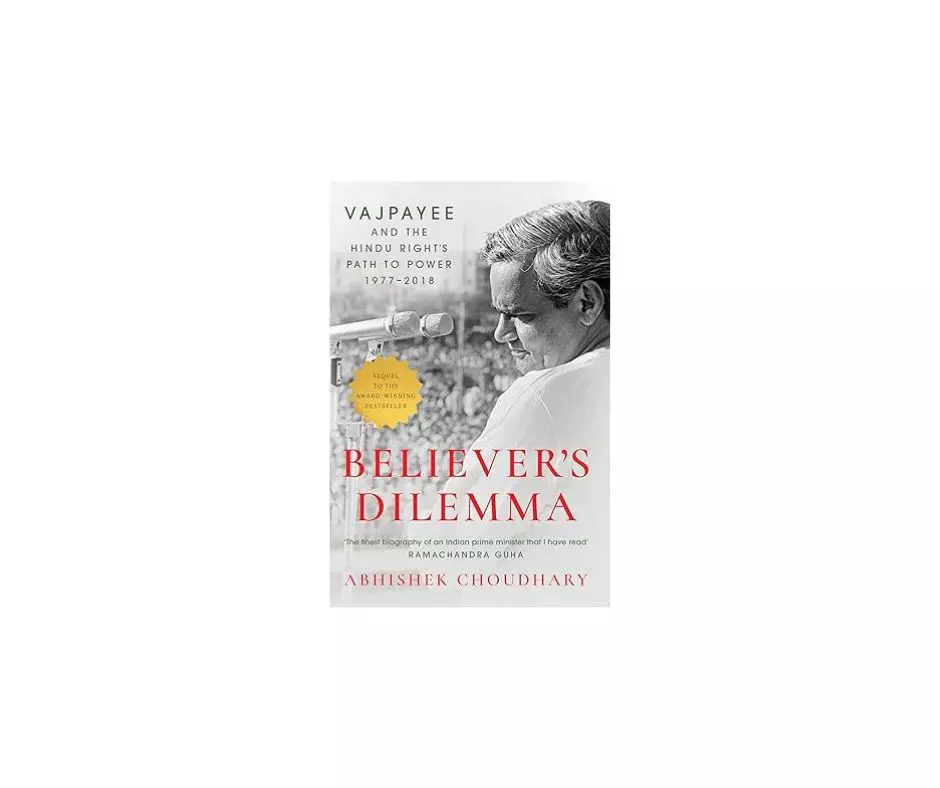
The second volume of Vajpayee’s life covers the last 41 years of the right-wing leader’s political journey. The title of the volume, Believer’s Dilemma, is quite apt. Vajpayee, who has survived on his rhetorical skills, had not worked out his core belief system. By his own reckoning he was a moderate, and he realised that moderates did not have a space in the political arena. As India’s foreign minister in the Janata Party government that lasted from 1977 to 1979, he had to struggle with the inflexible, Prime Minister Morarji Desai, who did not want to refer to the India-Soviet Union Friendship Treaty of 1971 on his Moscow visit, and he was opposed to the Comprehensive Test Ban Treaty (CTBT) on his visit to Washington. And in the secret meeting in a shabby government house in New Delhi with Israel’s defence minister Moshe Dayan, both Desai and Vajpayee rejected the Israeli leader’s overtures much to the chagrin of Dayan. The embarrassing thing for Vajpayee was when Indira Gandhi after her return to power in 1980, exposed the secret meeting with Dayan. Vajpayee on his tour of Arab states proclaimed that Egypt was isolated after the Camp David agreement with Israel. Vajpayee and Desai realised that they did not want to alienate the Arab states. It was indeed a learning curve for Vajpayee of what it is to be in office. But he seems to have relished the pull-and-push of policy compulsions.
It is surprising that both Vajpayee and Advani were reluctant to walk out of Janata Party even after the fall of the Desai government. They believed that the right-wing group had at last found a footing in mainstream Indian politics and it should stay there. But it is the Rashtriya Swayamsevak Sangh (RSS) hardliners who insisted on the Jan Sangh faction of the Janata Party to come out and form a new party. Vajpayee became the president of the new set-up, the Bharatiya Janata Party (BJP), and under the influence of Jayaprakash Narayan, he forced “Gandhian Socialism” on Hindu hardliners in the BJP. But it died a natural death. The surprising thing is why did the party stick with Vajpayee when they did not much like his ideological inconsistency. They needed a credible public face, and however unsatisfactory, Vajpayee was that face.
In the 1980s, Vajpayee was pushed to the margins and he did not put up a fight. He bided his time as it were. He kept aloof from Advani’s 1990 “rath yatra” and did not approve of the involvement with the Ayodhya agitation. He was in favour of a political and legal solution to the problem. But he dare not state his position because of the rising militancy of the Hindu groups. Choudhary writes that after the Babri Masjid demolition, “a man on the margins of the feud was now at the forefront, defending the mosque-razers”. And he notes, Vajpayee said in an interview, “Moderates have no place in present-day politics. Who is going to listen to the voice of sanity?” The truth is that he did not stand up strongly enough for moderation. He did not want to pay the political price it involved.
Believer's Dilemma: Vajpayee And the Hindu Right’s Path to Power 1977-2018
Abhishek Choudhary
Picador India/The New India Foundation
pp. 496; Rs 639
