The authors share examples from countries like Singapore that built green spaces or Israel that managed to solve its water crisis to present them as blueprints for India
A 2025 report noted that ~40 million litres of untreated sewage enter water bodies in India. What was once a wetland in Karawal Nagar, in the east of Delhi, “plastic now dominates”, as per a Down to Earth report. On 29 April 2026, several parts of Bengaluru witnessed 78 mm of rainfall in less than an hour, highlighting one of the aspects of worsening climate change in the global south.
These seemingly disparate submissions are interconnected. Though India is positioning itself as a world leader and wants to be a developed nation by 2047, it is faced with an onerous task: value water as a macroeconomic variable.
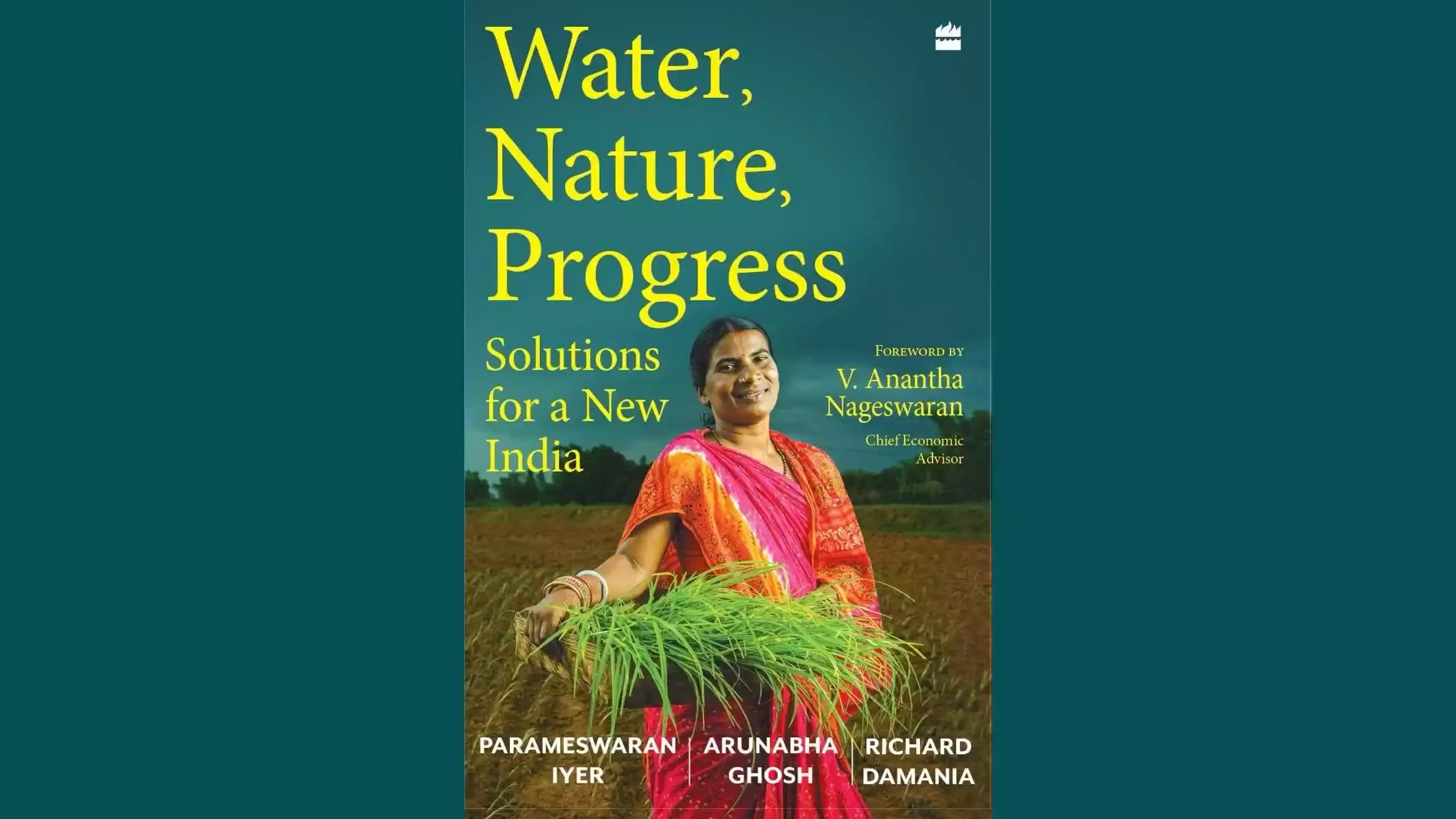
In this context, a book like Water, Nature, Progress: Solutions for a New India helps drive an urgent attention towards it. Divided into nine chapters, the book not only informs how the Green Revolution of the 1960s is an oversubscribed tradition nowadays, with it resulting in depleting groundwater, but also argues how “green water’s (soil moisture and rainfall stored in soils) contribution to agriculture is often overlooked in policymaking”, proffering effective soil management to unlock green water reserves and practices like prioritising millets over rice to pay off dividends.
In each chapter, the authors share how already implemented solutions can be expanded in select Indian states. For example, East Kolkata wetlands contribute “billions of dollars in framed output, flood protection and carbon sequestration”, supporting “150,000 people”. Though not all implementations were successful. The disastrous impact of a myopic vision and misplaced priorities is clear in the [water-sharing problem of] the Bisalpur dam case in chapter six. The authors share examples from countries like Singapore that built green spaces or Israel that managed to solve its water crisis to present them as blueprints for India.
They particularly emphasise the need to “trigger the circular economy” for treated used water (TUW), but alongside it, note how its scalability is pivoted to “data-driven accountability”. As for water to be considered a valuable resource, authors argue that everyday behaviours and attitudes towards water must change. For example, the “free” asset tag attached to water needs a rethink and farmers must move towards more water-efficient crops.
Though its modular structure may have been employed to render it readable, it is bothered by with coherence of thought. Certain jumps make it appear like a corporate environmental impact assessment report trying too hard to convince itself of its own benefits. Then, it didn’t strike the authors to add gendered economic disparities in a book that talks about water. For example, a UN report noted how “global water and sanitisation crisis” affects women unequally — they spend “over three times more than men and boys” on water collection. Then, the diplomatic segues aren’t appetising either. They make these authors look too devoted towards the present dispensation. Except for some unhelpful mild submissions, there’s a total lack of critique of governmental policies and their misgivings in governance. A diverse perspective on the natural resource could’ve made Water, Nature, Progress a valuable addition to the ongoing crisis.
Water, Nature, Progress: Solutions for a New India
By Arunabha Ghosh, Richard Damania and Parameswaran Iyer
HarperCollins
pp. 257; Rs 799
