The book also deftly illustrates how in order to manufacture a past and uniformity, the region lost much of its rich diversity
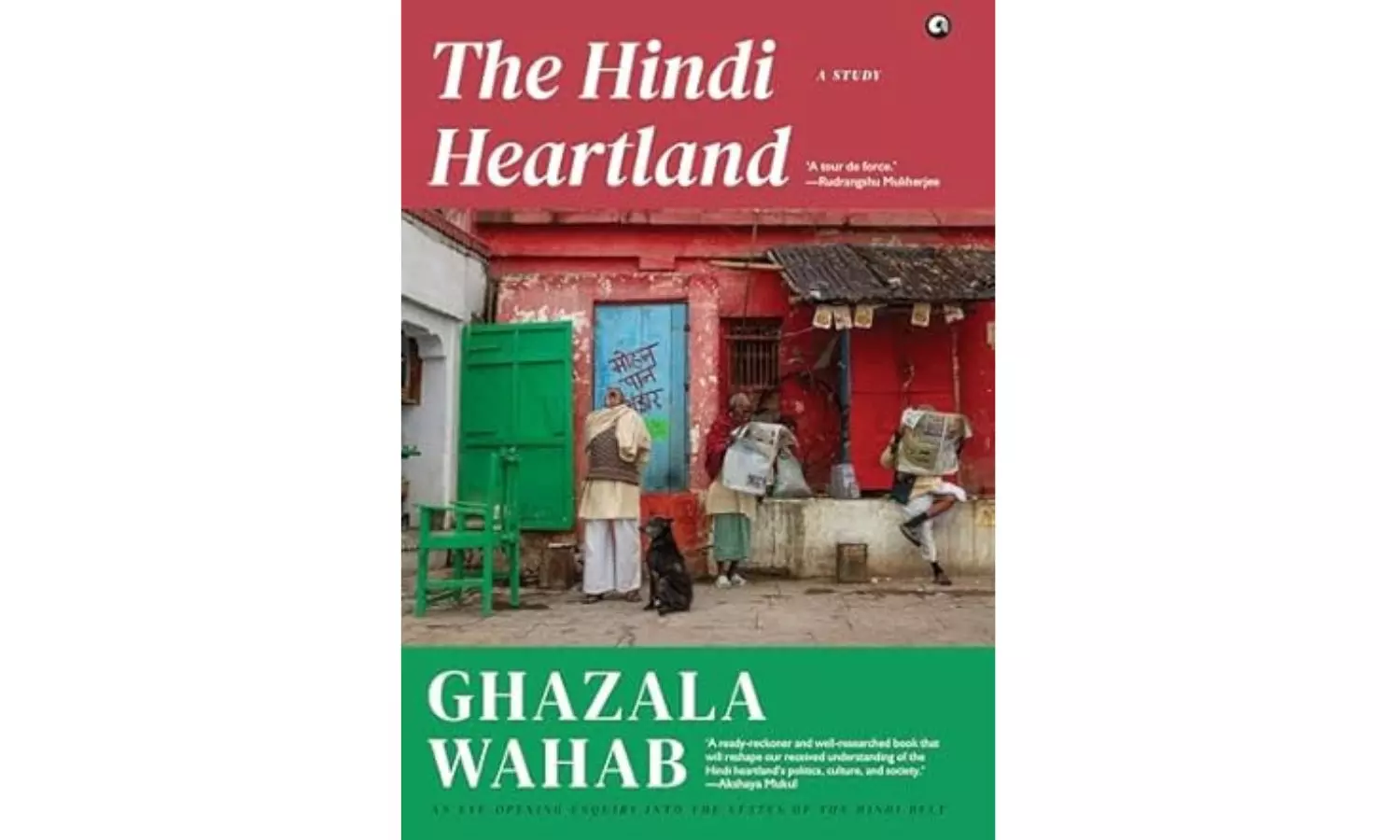
There are words and phrases which we use so often that it does not even occur to us that there could be a rich history and legacy behind it. “Hindi Heartland” (also called Hindi/Cow-belt) is one such phrase, frequently used and misused across media and academia, without one realising that it is not a monolith but that the heartland is full of diversities and immense paradoxes. Hence, it becomes essential to put things into perspective and contextualise the term. The book under review, written by senior journalist and author Ghazala Wahab, is the first book length study done outside academia, covering the socio-cultural, historical, economic and political aspects of the subject.
Written with academic rigour and journalistic flair, the book is divided into five sections. It opens with presenting an overview of the region, namely the states of Bihar, Chhattisgarh, Jharkhand, Madhya Pradesh, Rajasthan, Uttarakhand and Uttar Pradesh. Not only does the book present a detailed survey of the region and its plight, it also lays out the reasons behind its backwardness. In doing so, the author situates the current state of affairs within its historical context, in order to provide a much-needed long view. The author is of the opinion that “the social backwardness of the region is a consequence of both its politics and economic backwardness”. According to Wahab, “While the latter was caused by British colonialism, the former has been the result of caste and religion-based post-Independence politics which reduced the democratic process of elections to community loyalty rather than delivery of development and welfare.”
The book also deftly illustrates how in order to manufacture a past and uniformity, the region lost much of its rich diversity. Unfortunately, this continues till date despite its visible socio-economic impact, which is further dividing the society and creating inter-community and religious conflicts on a day-to-day basis across the region. As a result, “all Hindi belt states are anxious to pass off hate crimes as law and order incidents … the reason for doing this is to deny the existence of a trend or the emergence of a phenomenon”. Further, explaining the reason, she notes that “this is of great importance because the state governments want to draw attention away from the greatest churning that is happening in the Hindi belt, which for all its limitations, remains central to India's political and social identity”.
Wahab ends the book on a hopeful note, or rather, with a prayer,”“May it find the heart and courage to reclaim its family legacy of tolerance and coexistence. Because what happens in the Hindi heartland happens in India.” While one wants to only add Amen! to this, however, given the knowledge and vast experience of the author as a journalist and analyst and her access to the experts, what would have been even more valuable was if she had provided some suggestions on how to reclaim the lost courage and diversity of the Hindi Heartland.
Mahtab Alam is a Delhi-based multilingual journalist and writer
The Hindi Heartland: A Study
By Ghazala Wahab
Aleph
pp. 528; Rs 999
