This book is an easy-to-grasp compendium of safe generalisations about Indian politics and economy, which partisans on either side of the left-right ideological divide would find distasteful
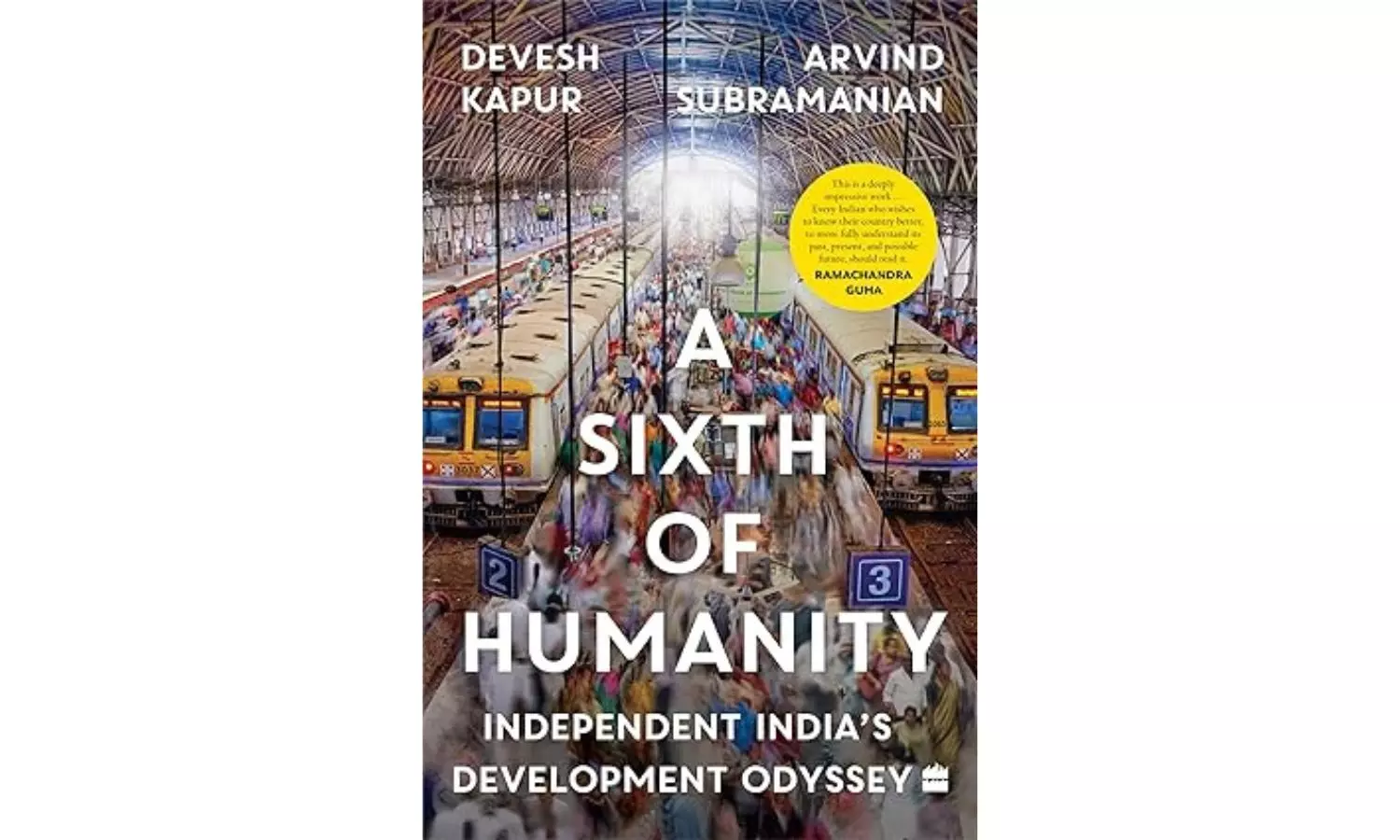
Devesh Kapur and Arvind Subramanian, Kapur an inter-disciplinary scholar of development, Subramanian, an economic analyst, promise at the beginning of the book that they would not merely argue nor merely offer facts, but that they would offer arguments based on facts. They have marshalled facts from political, which includes sociological and economic matrices of the last 75 years, and it is revealing in more ways than one. For example, they show that taxation in India compared internationally is low but the governmental expenditure is high. They point out the distortion in government employment, the number of central government employees is smaller compared to that of the state governments, and that it is low at the local government level like municipalities where it should be the highest. Because it is at the local level of government that public services need to be delivered and yet there are not enough people to do so. They also reveal that in the phase of the socialist state when state capitalism flourished investments were made in capital intensive enterprises like steel plants, and this top-heavy industrialisation came at the expense of agriculture. Another interesting fact that comes to light: It is during the planning era that fiscal deficits were low compared to the post-1991 “neo-liberal” — it is a phrase that the authors use — the fiscal deficits have been high. In contrast to popular perception, populism has gained ground, and they say there are democratic compulsions due to minority governments and the rise of many political parties to power in states, in the “neo-liberal” phase. The authors describe India as a “precocious democracy” and they say that it is vulnerable.
This book is an easy-to-grasp compendium of safe generalisations about Indian politics and economy, which partisans on either side of the left-right ideological divide would find distasteful. But Kapur and Subramanian try to hover above the ideological surfaces. They express the political developments under Prime Minister Narendra Modi, and do not hesitate to call it majoritarian based on religious identity. They say it is to be seen how discrimination against minorities will affect the future of the polity. They have their biases. Their disapproval of Narendra Modi’s religious nationalist politics arises from the liberal space of the American university campus. They are particularly harsh on Pranab Mukherjee’s retrospective taxation amendment, which was done with Vodafone the Dutch telecom major, selling its Indian assets to Hutchinson of Hong Kong in Cayman Islands, a tax haven. Of course, in a book of this nature, they cannot explain their reasons for opposing the tax amendment. They say that not just Vodafone but other international corporations like Cairn and Vedanta were affected too. They say that Mukherjee was rewarded when he was made President of the country and later awarded Bharat Ratna. There is not much about the trend of infrastructure development in the hands of Indian private sector majors, and whether it spells cronyism of some kind.
A Sixth of Humanity: Independent India’s Development Odyssey
By Devesh Kapur and Arvind Subramanian
HarperCollins
pp. 760; Rs 1,299
