As the boy Lajos grows up, the new century begins to unspool itself and throw up manifold public and private disasters: the unsinkable Titanic sinks, the First World War breaks out, the baroness drowns herself (by walking into a lake with stones in her pockets much like Virginia Woolf did), and the baron becomes an alcoholic wreck
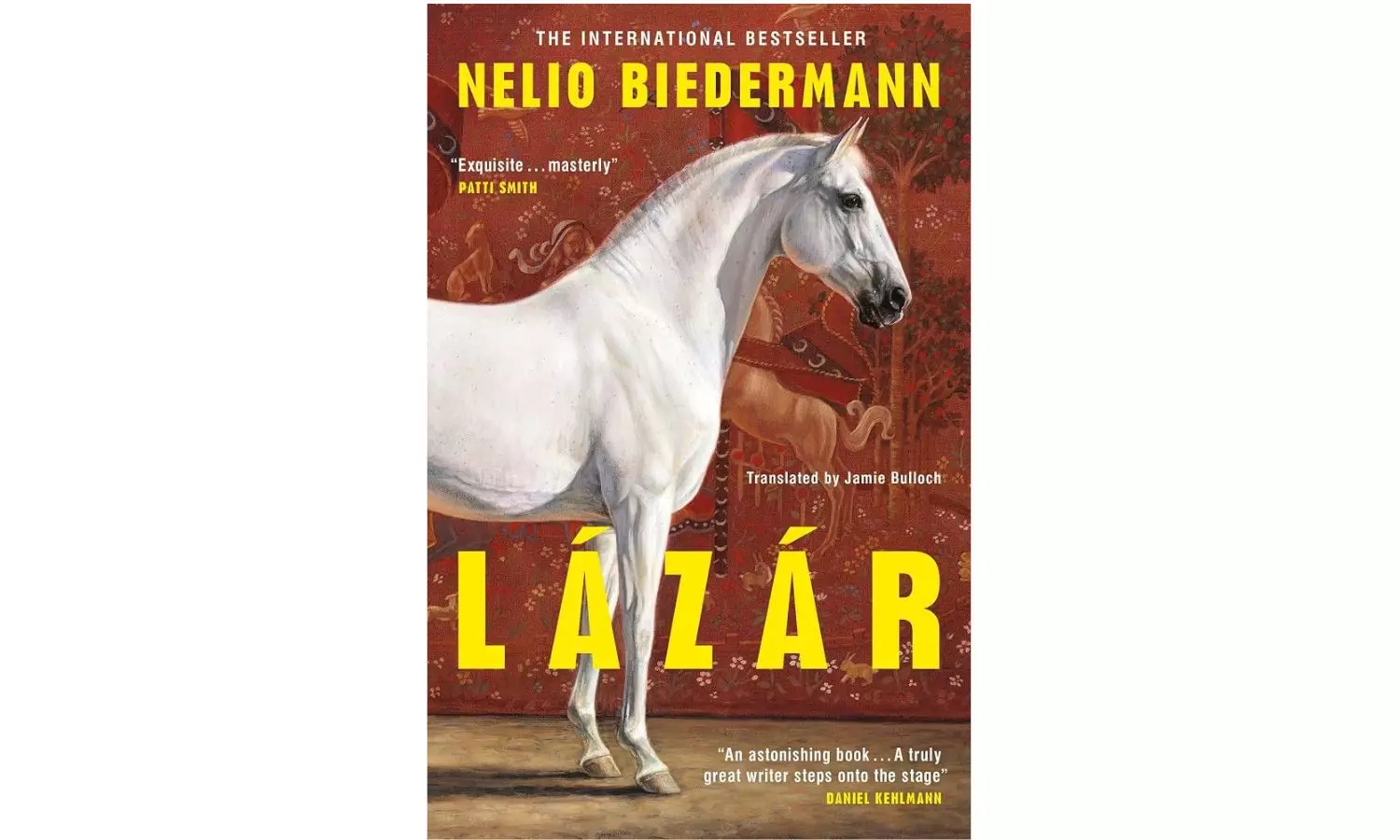
Lázár, originally written in German by Nelio Biedermann, became a runaway bestseller after it was published last year. No doubt, nostalgia was a big part of its appeal. For Lázár is the story of an aristocratic Hungarian family which goes from generational wealth and privilege to dispossession and penury as cataclysmic political events convulse Europe during the first half of the 20th century.
The novel opens with a lyrical flourish and we encounter Baron Sándor von Lázár and his wife Mária presiding over their abundant lands and their splendorous manor house. But darkness and deception lurk beneath the pomp. The baroness cuts herself daily to feel alive, has a brief affair with a stable hand, and produces a baby boy with water-blue eyes and translucent skin. The baron is, of course, clueless that his son and heir is not of his own blue blood.
As the boy Lajos grows up, the new century begins to unspool itself and throw up manifold public and private disasters: the unsinkable Titanic sinks, the First World War breaks out, the baroness drowns herself (by walking into a lake with stones in her pockets much like Virginia Woolf did), and the baron becomes an alcoholic wreck.
After he dies, the young Lajos manages to take the family’s fortunes in hand. But then the Second World War erupts and tears into every certainty that he and his family grew up with. Lajos, his wife Lilly, son Pista and daughter Eva now begin their journey into hardship and anonymity and awaken into a new reality they must learn to make their peace with.
Some have hailed Biedermann, who is a Swiss national of Hungarian descent, as the next Thomas Mann and Lázár as the next Buddenbrooks. That seems like an overstatement. Though the novel is certainly a generational saga which unfolds amidst a collapsing society, its recasting of familiar material — the ravages of the Second World War and its ruinous aftermath — feels somewhat tepid. The characters, too, remain largely bloodless. They indulge in their perfunctory loves and lusts, their guilt and cowardice, but rarely, if ever, do they demand our curiosity or involvement.
Biedermann, who was only 22 when he wrote the novel, attempts to give the story some elements of magic realism too. However, each one of them seems forced, as if they were set pieces wheeled out merely for effect. Whether it is Lajos’s eerie, translucent skin when he was a boy, or the seemingly haunted forest near the castle grounds where mysterious creatures did unspeakable things to his teenage sister Ilona, or the fact that his son Pista talks to shadows when he is a child — they have no relevance to the events that follow and are left by the wayside as the story rolls on.
That said, Lázár, translated from the German by Jamie Bulloch, is a pacey read punctuated with evocative descriptions, especially of the countryside — its summer blooms and its icy winter. That the book has managed to rekindle a yearning for the old world and the abiding sense of loss at its demise amongst so many of its readers is probably its most significant achievement.
Lázár
By Nelio Biedermann
MacLehose Press
pp. 304; Rs 1,450
