Farooqui paints a detailed picture of days that have left indelible marks on our culture and society
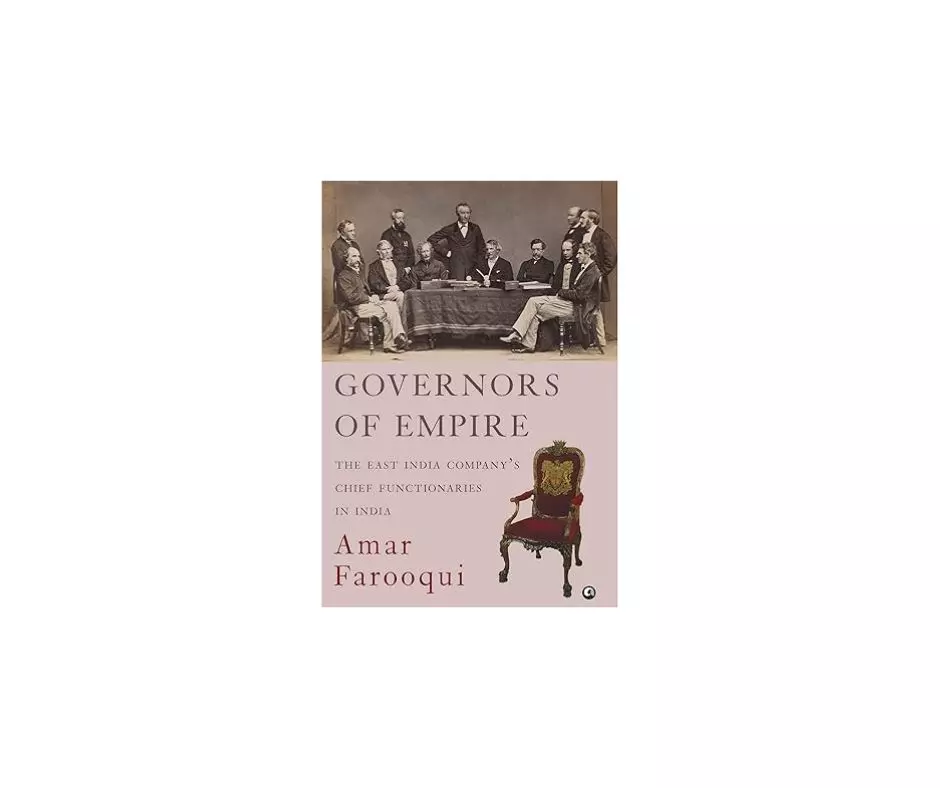
Governors of Empire is a detailed account of the governors — appointed initially by the English East India Company (EIC) and then usurped by the British Crown — who were supposedly in charge of a tract of land and its peoples so rich, so large and so complex that administration would have been a nightmare. The trickle of arrivals that started in April 1608 when an EIC ship named Hector arrived on the shores of Surat grew into hordes of salivating fortune seekers, landing among riches far beyond what they had seen so far. What they purportedly offered was trade, but deep in their hearts lay the seeds of pillage, conquest and allied brutality.
Much of cursory history of the British rule of India has placed the likes of Robert Clive, Warren Hastings, Charles Cornwallis, Richard Wellesley and many more on pedestals of awe and inspiration. If historian Amar Farooqui has avoided much emotional contact with these characters, it was possibly because he wanted history’s gory innards to speak for itself. His research tears apart the thin “nobility” veneer, exposing these men and their naked greed, their exploitation.
Consider Robert Clive, a name synonymous with British roots digging deep into Indian soil. Starting as a writer with the EIC, he hustled and haggled his way to financial and political stardom, using deceit in one hand, hate in the other. His larger-than-life image was built on a plinth of dirty controversy, but if the British government had gone light on him it was because of the immense wealth he helped siphon off the land that he was around simply to ‘administer’, striking deals that ended up making the island kingdom richer.
Farooqui does not always spell out the reality, but builds a fortification of documentation that anybody can use to get to the marrow. If Clive’s sheer deceit in the annexation of Bengal was a start, Hastings widened the extortion base to include Bihar, and Wellesley established the system of ‘subsidiary alliances’ that steadily starved millions. After Lord Moira destroyed the rule of the powerful Marathas in western India, Lord Dalhousie followed up with the annexation of Punjab and Awadh. When you can see how India helped put meat on these sketchy skeleton characters, you realise the fallacy of it all.
All was helped by spurious narratives that made the Crown look good. Take the “Calcutta’s Black Hole” story, for example. As Farooqui points out: “These were months during which the Company was faced with the possibility of being permanently expelled from Bengal. Fort William had been evacuated and abandoned to its fate by senior functionaries in Calcutta. A few Company employees continued to reside within... Of these, some, mainly soldiers, were imprisoned after Siraj’s troops occupied the fort... It is likely that a small number of prisoners perished in the cell in which they had been confined. The number has remained at the centre of the controversy... The principal EIC official who was present in Calcutta at the time of the alleged incident, J.Z. Holwell, later claimed that of the 146 prisoners incarcerated in the ‘black hole’, only twenty-three survived. Almost all accounts of the incident may be traced back to Holwell... the only source...”
Of course there were some positive by-products. “Towards the end of his tenure, Hastings, through official patronage, helped in giving shape to a programme for institutionally generating knowledge about India by systematically utilising the intellectual resources that had become available in the process of governing Bengal and the other presidencies. The establishment of the Asiatic Society (of Bengal) in 1784 was one notable outcome of this endeavour. William Jones, a judge of the Calcutta Supreme Court who arrived in India in 1783, was the moving spirit of the venture, and was the first president of the Asiatic Society.”
Such acts, aimed at educating the colonising power about Indian traditions, did help document and transcribe large swathes of Sanskrit, Persian and other related manuscripts.
In all, Farooqui paints a detailed picture of days that have left indelible marks on our culture and society.
=-=-=-=-=
Governors of Empire
By Amar Farooqui
Aleph
pp. 344; Rs 999