The author, Tash Aw, has been a prize-list regular since his debut novel, The Harmony Silk Factory, made the longlist for the 2005 Booker Prize
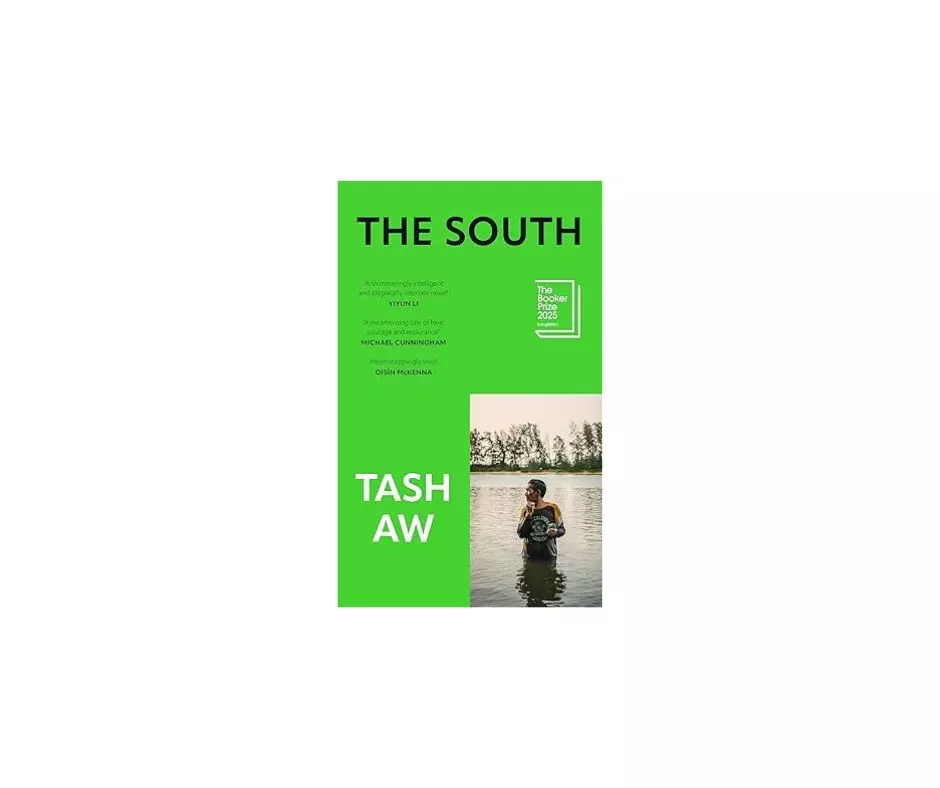
Cover page of The South
The events of the novel are presented in the present and past tense by a man as he recalls a summer when, as a teenaged boy, his Chinese-Malaysian family moved to the south of the country to see after an orchard bequeathed to them by his late grandfather.
The boy, Jay, is seventeen, with two older college-going sisters. His father teaches mathematics at a nondescript Malaysian University and is married to Sui, who was once a student of his. If it seems odd at first that the old man willed the land to his daughter-in-law, it is because the land is tended after by his illegitimate son, Fong, and his raffishly beautiful son, Chuan, with whom Jay develops an intense infatuation.
Just a few years apart in age, the boys fall into a dreamy, visceral romance as they get to work on the familys fruit orchard. The narration shifts between Jay in the first-person and much further on in retrospect; the effect is deliberately slippery, layering Jays uncertain and naive coming-of-age with a sharper ache for the past.
The author, Tash Aw, has been a prize-list regular since his debut novel, The Harmony Silk Factory, made the longlist for the 2005 Booker Prize. Since then, The South is his third novel to have repeated the feat. Tender, tactile and perfused with sociohistorical detail, it is the first of a planned quartet of novels to trace the lives of Jay and his family as they move through the economic and climactic turbulence since the nineties.
Several critics have rightly pointed to the Uncle Vanya-esque conceit of two estranged brothers reuniting, as part of an ensemble, over a dying farm. Even as we mostly spend time with Chuan and Jay, no character, however minor, is given short shrift. Particularly memorable are the pair of Sui and her taciturn older husband, Jack, a couple so far apart in age and disposition that they appeared to be not so much as a union but a collision. The promise of their story is built off the wonderful flourishes of Suis interiority that the author offers. One hopes a sequel shall return to them just as much as the other two protagonists.
The broader interplay between education, gender and who lays claim to the rapidly dissolving promises of modernity receive plentiful airtime in this surprisingly compact opus. There is more than a hint of cliche to the conventions of queer romance on offer here, between the roles of class and gender that Jay and Chuan so cleanly occupy, as well as the narrative rhythms of their arc yet all of this is offset by the undeniable, unshowy elegance to Aws prose and worldbuilding. It will be a pleasure to see where he takes us next.
The South
Tash Aw
Fourth Estate UK
pp. 280; Rs 599
( Source : Asian Age )

Next Story