Vasudev is not trying to write a polemic or a theory-heavy intervention. The politics of the book emerges through tireless accumulation, instead of simplistic accusation
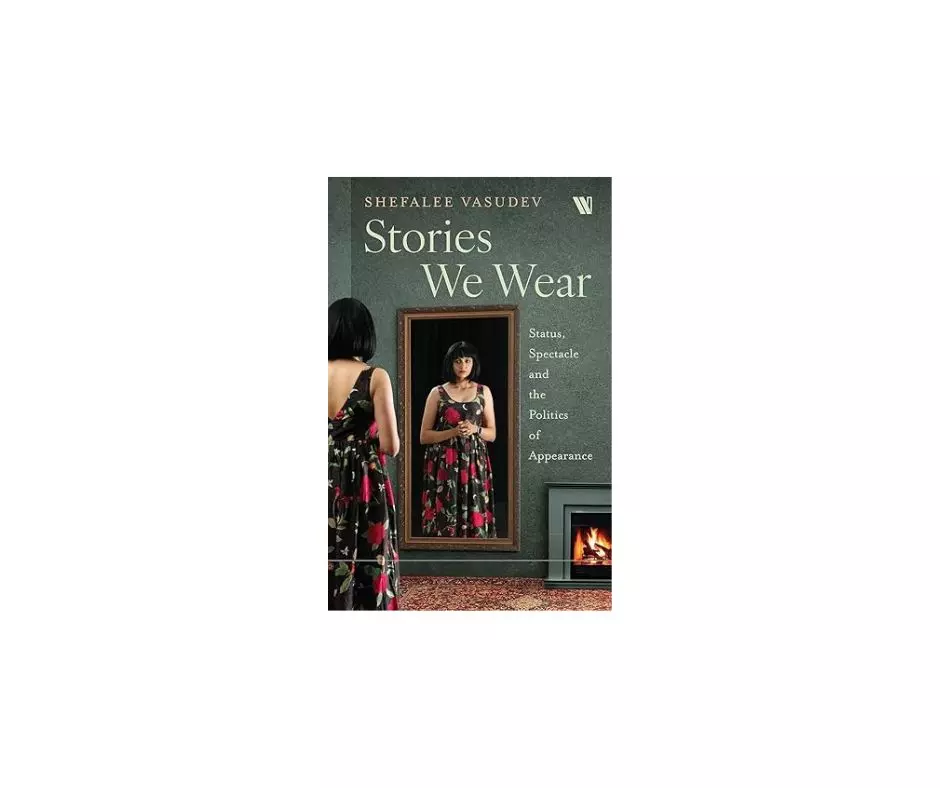
Stories We Wear by Shefalee Vasudev is not just a book about lifestyle journalism, it belongs to the tradition of quiet cultural criticism, fused with memoir and even philosophical meditation. It takes its cues from appearance, but delves deeper into how appearance stands for grief, anxiety, aspiration, manipulation, class mobility, moral inclination and political allegiance. The exceptionally observant Vasudev reads surfaces as an archive of nuance. The external becomes the site where power disguises itself as “taste” or “choice”.
“Appearance” may refer not only to apparel but also to roads, airports and other public spaces. For example, ‘Kartavya Path’, the politically charged first chapter, treats the space not merely as a redesigned and renamed avenue, but where the state choreographs how citizenship vis-a-vis nationalism should look. In ‘Wearing Politics’, Indian politics is approached through the appearances of the leaders because power dresses before it speaks. In ‘How Khadi Became Uncool’, Vasudev goes beyond the obvious. She demonstrates how a culture (of khadi) once synonymous with ethical resistance is slowly being reduced to aesthetic obligation. She deduces that this is what happens when politics and fashion both lack imagination. When she writes on airports and cafes, in two separate chapters. they become sites where class aspiration and self-presentation collide with surveillance, anxiety and even exploitation. Who expects reportage on burn wards in a fashion book? But ‘The Fire Exit’ argues that the ordeals faced by fire and acid survivors should have its place in any discussion on the politics of the body. This, and ‘Bareilly Ki Barfi’ and ‘Masaba’, can be read as the gender bloc of the book.
Yet Vasudev is at her daunting best in ‘The Devil Wears Green’, a sharply acerbic chapter wherein she exposes greenwashing or sustainability as a performance rather than practice. ‘Last Rights’, the last chapter, is the most emotionally grounded one, however. Vasudev could have restricted it to the performance of mourning or mourning management during last rites. But she goes further. She talks about euthanasia, and also about the right to die with dignity routinely denied to manual scavengers.
Vasudev is not trying to write a polemic or a theory-heavy intervention. The politics of the book emerges through tireless accumulation, instead of simplistic accusation. It is responsible, not radical. She connects everyday cultural information to ask deeper sociological questions. She elevates appearance into an interesting way of reading society as a whole. Dress and decoration become a doorway to discussions about identity, power and belonging.
Stories We Wear: Status, Spectacle & the Politics of Appearance
By Shefalee Vasudev
Westland
pp. 288; Rs 699