Though this his sparest work yet, there is a miraculous ease, a literary sleight-of-hand, with which the author constructs moments of deep emotional resonance even as he crafts a character that defies most conventions of literary storytelling
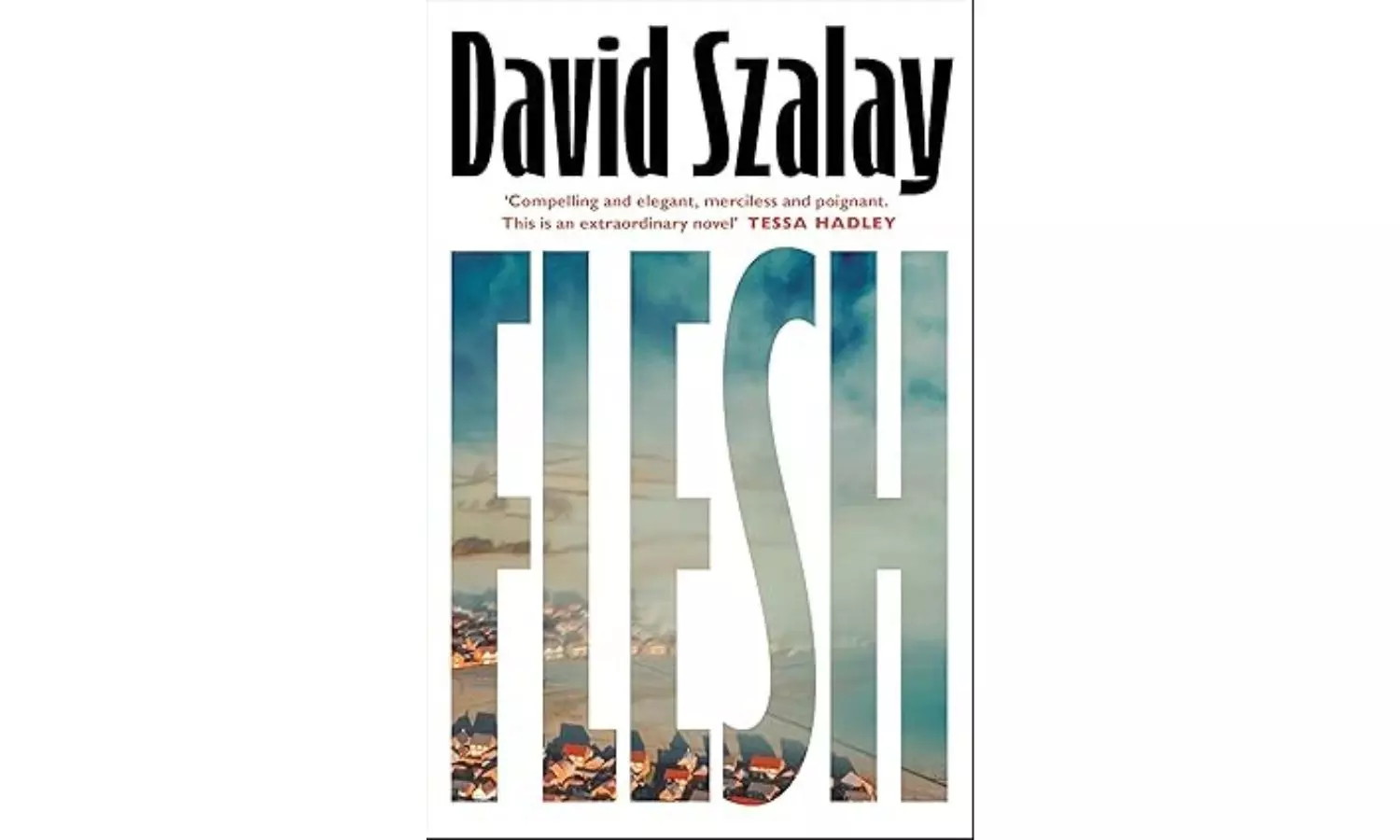
Born in Canada and raised in the UK, David Szalay’s past five novels have all been marked by a preternatural facility for exploring the unspoken tensions that animate human life. He is best known for his Booker-prize nominated 2016 novel, All That Man Is, which cemented his reputation as one of our finest chroniclers of failed masculinity. His latest novel, Flesh, which has been released to widespread acclaim in the West and won Szalay his second Booker nomination, is this year’s frontrunner for the Prize.
Though this his sparest work yet, there is a miraculous ease, a literary sleight-of-hand, with which the author constructs moments of deep emotional resonance even as he crafts a character that defies most conventions of literary storytelling. Szalay constructs István, whom we witness in fragments across four decades of his life, as a closed fist — resistant to the kind of agential thinking that sparks most protagonists into action. To most of the questions posed to him in this novel, István replies with “okay.”
Across Szalay’s narrative, we witness life happening to Istvan: after a mishap in his teenage years ends in the death of a man, we see him buffeted by the tides of a changing, increasingly insular Europe. Chewed up and spat out into London as a young man, he ascends, improbably, into the British elite. These chapters, revealed as fragments over forty years of his life, are often catalysed by a series of intense sexual encounters that István seems to attract almost unknowingly. István’s need for sex, and the insistent, unexpected ways in which it seems to find him, forms the soft centre of his interiority. The vulnerability of desire, inchoate articulations of desire and need, are rendered masterfully through Istvan’s eyes in these scenes.
Szalay’s austere prose — all bone and taut sinew — belies this improbable tenderness. In his review of All That Man Is, the critic Dwight Garner wrote that the novel “has a large, hammerlike engine, yet it is content to purr. There’s a sense of enormous power held in reserve”. This novel is similarly littered, amidst the staccato minimalism of its prose, with moments of throwaway, unshowy brilliance. The impression it leaves, on every turn, is of an author in complete control of his material.
Amidst the mechanical solitude and distinct nihilism of Central Europe is a novel that rises beyond its thematic trappings into a set of far more old-fashioned concerns: Flesh is ultimately a novel deeply interested in the additions and subtractions of a life; it culminates in one of the most devastatingly simple, and richly earned, closing lines I’ve encountered in a long time.
Flesh
By David Szalay
Jonathan Cape
pp. 352; Rs 2,269