There are times when this works to good effect, as in Majumdar’s previous novel where we follow a PT teacher as he becomes an unwitting foot-soldier of a Hindutva brigade
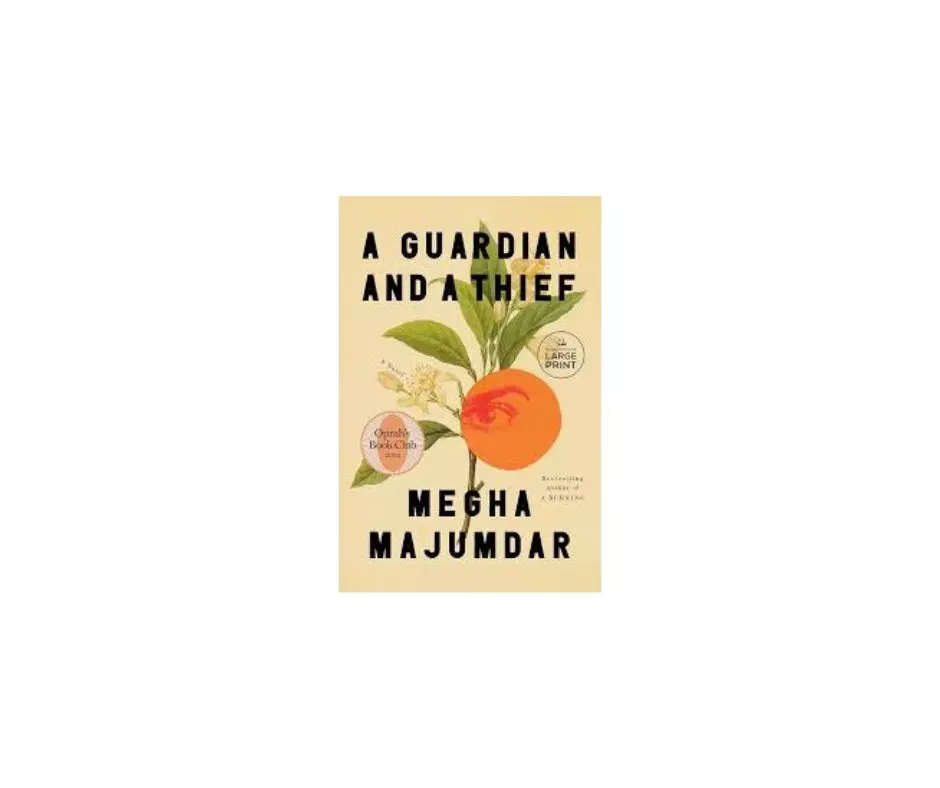
Megha Majumdar’s previous novel, A Burning, followed a young woman arrested for making a Facebook post which irks the government. On offer here is a reaffirmation of her nose for the peculiar unreason that saturates contemporary India; where A Burning examined the unreason of Hindu nationalism, the concerns of Majumdar’s new novel, A Guardian and a Thief, operate on a scale which is, at once, both intimate and ecological: an imagination of an uncomfortably proximate future marred by famine and forced migration.
A middle-class family in Kolkata — two-year-old Mishti, her ‘Ma’ and ‘Dadu’ — packs its bags for Ann Arbor, Michigan, on the promise of a ‘climate visa’, leaving behind a city decimated by what promises to be yet another major famine. Around them, the streets break out in skirmishes over fresh vegetables and sacks of rice, and thieves break into houses to steal a sack of eggs. When one such thief breaks into their home, stealing a purse containing passports meant for the US, all hell breaks loose. The thief, we learn, is named Boomba — himself a young migrant, trying desperately to provide for his family in the hinterland. As the plot develops, he becomes the yang to Ma and Dadu’s yin, their increasing desperation to eke a life out of a crumbling society blurring the lines that divide the guardians and thieves among us.
Majumdar revels in the shallow focus; our characters are named ‘Dadu’ and ‘Ma’ in spite of a third person narration, not because that is how the world sees them but perhaps because that is the shape their own interiority takes in times of existential upheaval. Their voices take detail and specificity for granted in the way we do when talking to ourselves. Places are left unnamed yet familiar, and exposition — when it arrives — is offered with great restraint.
There are times when this works to good effect, as in Majumdar’s previous novel where we follow a PT teacher as he becomes an unwitting foot-soldier of a Hindutva brigade. And yet, a familiar lament: this vagueness severely hampers Majumdar’s rendering of Kolkata, a place which appears in bits and half-realised pieces, missing the granularity that enlivens the landscape of a city. Though there may be a case to be made for such restraint, especially within the dystopian genre, working nicely in filling out the gaps beyond our field of vision, it is also an author’s mandate to equip a reader’s imagination; it is here that novel comes up short.
Bereft of the rhythm and texture of a fully realised city, the supposed sensitivity of these passages appears forced, unearned and ultimately performative. Majumdar’s characters, likewise, appear at their richest when contemplating the moral calculus of survival with filial belonging, yet too often lack the humour and desire that animate good fiction. Under these circumstances, the carefully plotted overlap between their lives and the novel's broader themes ultimately collapses, leaving them as unaffecting case studies rather than characters of flesh and blood.
A Guardian and a Thief
Megha Majumdar
India Hamish Hamilton
pp. 224; Rs 699