No surprise that Indian cinema has grown into the world's largest, perhaps the most vibrant, shaping cultural narratives in the most varied tongues, and touching the lives of millions beyond the oceans and the Himalayas
Believe it or not, the second volume of this series was published in 2015. That was dedicated to the Dadasaheb Phalke Awardees from 1992 to 2014. The names there had included Dilip Kumar, Bhupen Hazarika, Majrooh Sultanpuri, Hrishikesh Mukherjee, Sivaji Ganesan, Mrinal Sen, Dev Anand, Asha Bhonsle, Soumitra Chatterjee and Amitabh Bachchan, among 23 notables.
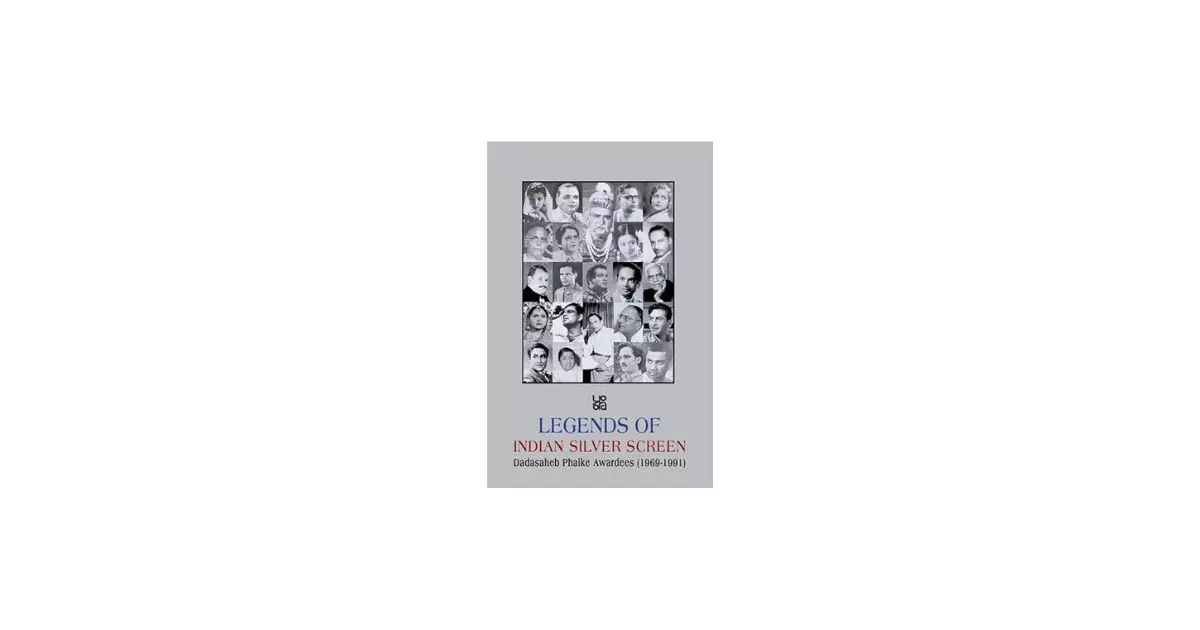
Now, working in a reverse gear, comes the prequel. And among another 23 recipients in this volume are Devika Rani, B.N. Sircar, Kanan Devi, Sohrab Modi, Prithviraj Kapoor, Satyajit Ray, V. Shantaram, Naushad, Nitin Bose, B.R. Chopra, Raj Kapoor, Ashok Kumar, Lata Mangeshkar, Akkineni Nageswara Rao and Bhalji Pendharkar.
Every single one of these names was unwaveringly committed to the art and craft of filmmaking, writes Asha Parekh, recipient of the 2020 Award. Their creativity brooked no compromise. And even when they were making entertainers, they invested their narratives with social concern and nationalist themes. This is what the award named after Dadasaheb Phalke recognises. And that is why every film personality aspires to receive this award... some day!
Phalke's Raja Harishchandra had started as a humble experiment in creatively harnessing the technological development photography had ushered in. The process had shaken the very roots of what was understood as entertainment till then. Indeed, Phalke's positioning of mythology as a mirror of society was so potent that it impacted Indian lives in unforeseen ways. So much so, that the Tamil film Thyagabhoomi, produced by S.S. Vasan from a story by Kalki Krishnamurthy, at the height of the India's freedom movement to glorify Gandhi, was banned by the Imperialist government soon after it released in 1939. And in 1936 with Achhut Kanya, Bombay Talkies had upturned the notion of caste rigidity when a high-born Ashok Kumar had said, "Hey Bhagwan! Tuney mujhe bhi kyoon na achhut banaya!"
No surprise that Indian cinema has grown into the world's largest, perhaps the most vibrant, shaping cultural narratives in the most varied tongues, and touching the lives of millions beyond the oceans and the Himalayas.
Therefore I, for one, am delighted to hold in my hands the journey of the legends who brought this about. For, we may have grown up singing Paan Banaraswala or gyrating to Disco Dancer, but how many of us know of Sohrab Modi whose one-liner, “Tera khoon khoon hai, mera khoon paani!” outlives so many Yahudis? And how many have walked the talk with Ashok Kumar, who hand-held Indian cinema from Bombay Talkies of the riot-torn 1940s to Bollywood of 1990s?
Legends of Indian Silver Screen was launched in Goa during the International Film Festival of India in November. But neither the duration of IFFI 2025 nor the expiry of the Gregorian calendar year takes away from the worth of the book edited by Sanjit Narwekar for the publications division of the ministry of information and broadcasting.
Legends of Indian Silver Screen: Dadasaheb Phalke Awardees (1969-1991)
Ed. Sanjit Narwekar
MIB, GOI
pp. 456; Rs 545