As the author later says: “…because everyone said the country now had a new template for autocracy, one that did not require an Emergency to be formally declared but that worked much the same way that Mrs Gandhi’s Emergency had.” The script worked back to 1977, to an issue of India Today, which carried an interview Indira Gandhi had given to British journalist David Frost soon after losing power. These are the base coding for the augmented reality that appears through the pages
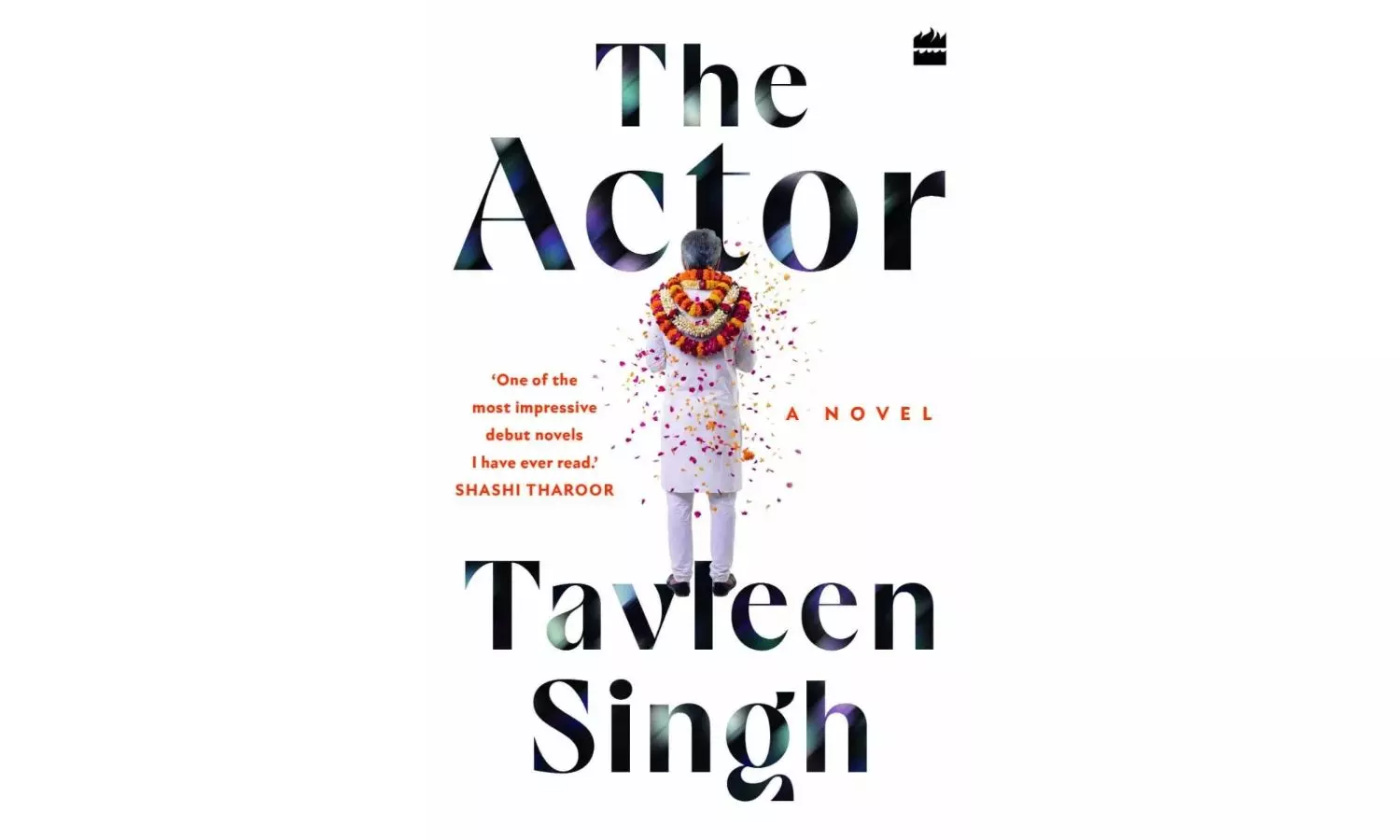
Amit Singh, Tavleen Singh’s protagonist in her first novel The Actor, is a fading Bollywood superstar who has acceded to his childhood friend Naresh Khanna’s request to join a new political party. Amit thinks this might give him a fresh chance at a new career, while Naresh believes Amit’s aura will have a positive rub-off effect on the fledgling party.
Amit soon finds himself dunked in a toxic political soup, much of which singes his unprepared skin. The Bollywood effect may generate a first-look burst of adrenaline, but an almost complete lack of understanding of the lives of India’s common man does little to inspire confidence. Then, as he meets journalist Maya — her allure seems to be more physical than in any keen understanding of the current political situation — Amit is fed homeopathic doses of reality and he slowly realises the importance of his mask, something he got used to in Bollywood and now fits him well.
The narrative exposes Tavleen Singh’s apparent detestation for ‘Parivaarbad’, her discomfort with a particular family; at the other end Reichsmarschall Guruji’s ruling Hindutva politics probably evolves as an experiment that used very wrong ingredients, yet yielded the right amalgam, for him. Neither side deserves plaudits.
As the author later says: “…because everyone said the country now had a new template for autocracy, one that did not require an Emergency to be formally declared but that worked much the same way that Mrs Gandhi’s Emergency had.” The script worked back to 1977, to an issue of India Today, which carried an interview Indira Gandhi had given to British journalist David Frost soon after losing power. These are the base coding for the augmented reality that appears through the pages.
Naresh, meanwhile, has already promoted Amit to No. 2 in the party, much to the chagrin of more experienced politicians and it seems a bit odd that a budget-deficit novice outfit would move with immediate national ambitions, rather than concentrate on issues and areas close to them before looking outwards. That, though, is the author’s prerogative.
A political potboiler it should have been, and to an extent it is. As an experienced, mature political analyst, the author brings to light the innards of a political party in germination, though the finances remain a trifle obscure. References to the Hindutva party are pretty much in the face, though Amit’s transition through these phases aren’t as spectacular as one expected. A surprise element is always the engine of change.
At one point in the development/change of the actor the author brings in Alexei Navalny’s posthumous memoir, The Patriot. It is not clear if Vladimir Putin’s tactics are equated with Guruji’s, but Navalny surely was at the far end of the spectrum which Amit was just about learning to navigate. That version of patriotism may not have been prescription reading.
The entire scenario would have been somewhat familiar, had the book not landed plumb into the emotional potpourri of the intense Cockroach Janta Party and the INDIA bloc agitations against the paper leak, ‘vote chori’ and such other serious issues. These create an intellectual isolation of sorts.
The Actor
By Tavleen Singh
HarperCollins
pp. 328; Rs 699