The book starts with Puri’s childhood years in Delhi and Kathmandu, where the sari ruled supreme
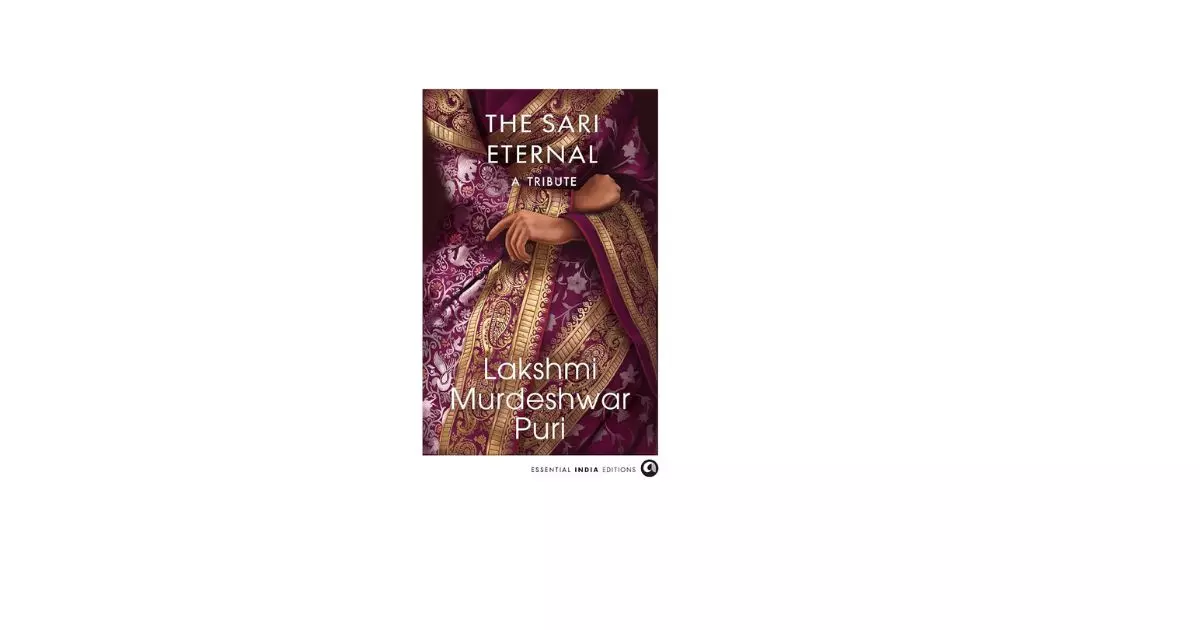
I had a lot of preconceived notions about Lakshmi Murdeshwar Puri’s book, The Sari Eternal — A Tribute. But luckily for me, Puri knocked all of them out from my head. Through her words, she took my hand and gently guided me into the world of that unstitched river of fabric that winds itself lovingly around a woman’s body like a warm embrace or a tender caress.
The book starts with Puri’s childhood years in Delhi and Kathmandu, where the sari ruled supreme. Her love for the sari starts as a toddler, using her mother’s sari as an invisibility cape/cloak, hiding behind it, sometimes wiping her wet face with it. Everything most children do with their mother’s saris. She absorbed her mother’s love for saris, through osmosis, asking for her own sari at a young age. When Puri was fourteen, she wore a sari during her theatre outing to watch the adult movie Woh Kaun Thi, to avoid being thrown out of the cinema hall for being a minor.
In the book Puri traces the lineage and history of this 5.50 metres long and 1.15 metres wide unstitched fabric, from the Indus Valley Civilisation 5,000 years back to current times, explaining Gen-Z’s fascination with this flowing garment, which can stake a claim to flattering all body shapes, yet retaining its identity and allure. The sari is both a mystery and an enigma, once enchanted, it captures the wearer in its spell, which remains unbroken all their lives. Puri, an Indian diplomat, graced many formal occasions in a sari.
Puri traces the history of the sari from Ganga Devi descending from heavens in a sari, to Goddess Lakshmi sitting on a pink lotus in her gold bordered red silk sari, to Goddess Saraswati in her white sari fringed with a gold border, to Goddess Parvati in her red sari to Raja Ravi Varma’s painting Shakuntala Looking Back depicting Shakuntala in a saffron sari, to Abanindranath Tagore’s paintings portraying Bharat Mata wearing a sari. When a sari is mentioned, how can one forget Lord Krishna saving Draupadi by incarnating as the sari eternal?
Sari and Bollywood heroines have a never-ending love affair, Madhubala’s wet georgette sari in Chalti ka Naam Gaadi, to Rekha’s monotone chiffon and crepe saris in Silsila, to Madhuri Dixit’s purple sari embellished with zardozi work in Hum Aapke Hain Kaun and Alia Bhatt’s saris with sexy bustier blouses that could be called a bralette in Rocky Aur Rani Kii Prem Kahaani, all get a mention. Not to forget the queens, freedom fighters and women politicians who made their unique saris their identity and a trend.
The book is an ode to the sari, which comes in diverse fabrics from different regions of India and is also draped in myriad ways. Saris are an intrinsic part of India’s cultural heritage; the warp and weft of its threads are interspersed with mythology and history. They are heirlooms passed down through generation, each capturing the essence of the wearer. Puri makes one fall hopelessly in love with the sari and makes one rush to one’s cupboard to pull out one such treasure and drape it around their body.
Rachna Chhabria is a Bengaluru based children’s author and a freelance writer.
The Sari Eternal
By Lakshmi Murdeshwar Puri
Aleph
pp. 186; Rs 499