The book is not a look back at history scholarship in India. It is about the joys and passing sorrows of Thapar’s life
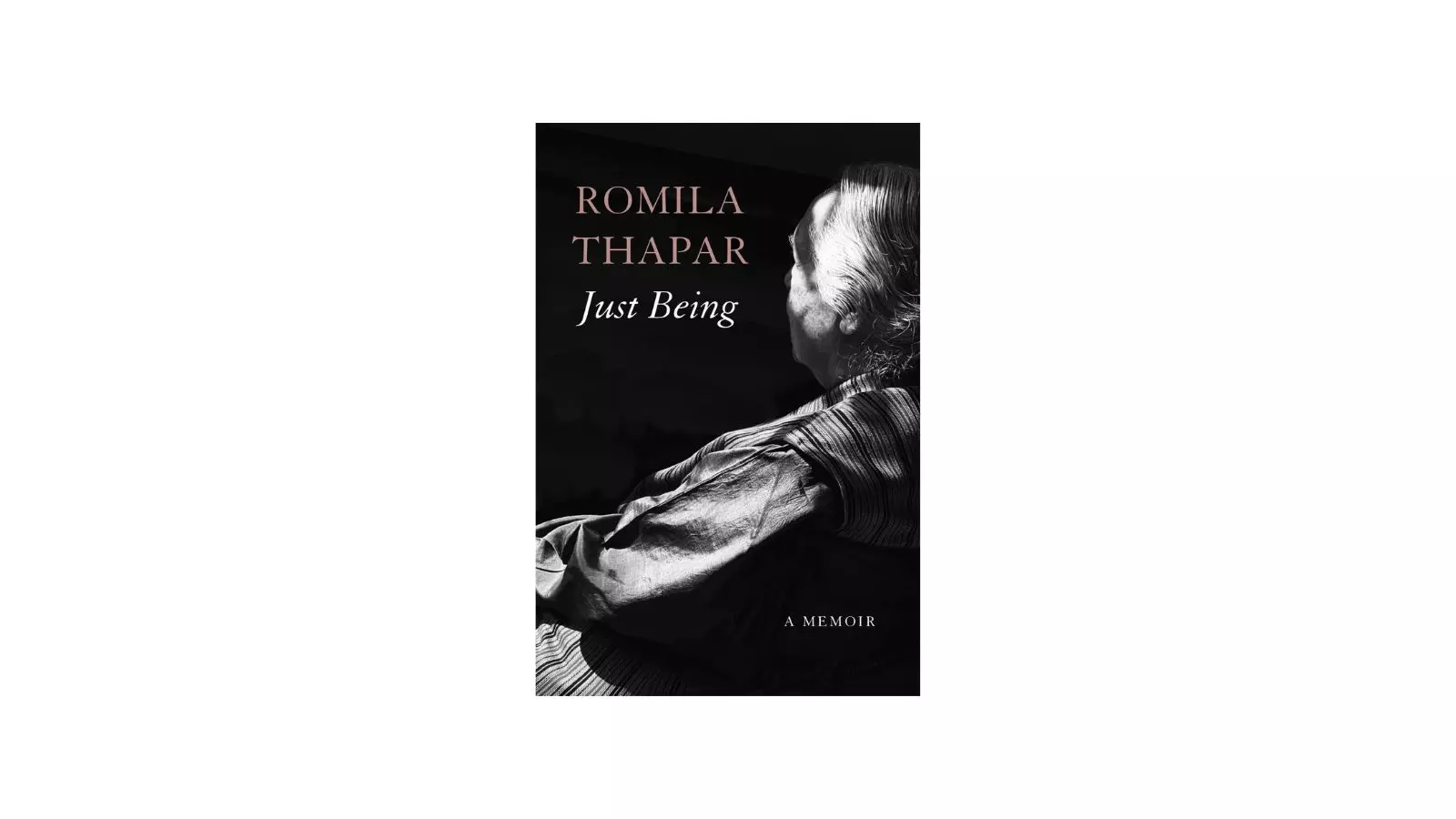
Most of the interviews/podcasts, reviews of historian Romila Thapar’s autobiography show her to be an embattled scholar in saffron times. She is indeed the target of rowdy and vicious baiting. She is sad at this turn of events. But she is holding her own and continues to make her point about history, calmly and in a dignified manner, that history is not a plaything and it needs to be backed up by scholarship and evidence to be serious. That there is no serious historical writing from her opponents makes her position as a historian unassailable. In the first place, it may be said that the memoir is not an autobiography in the strict sense of the term because it is more an anecdotal recall of the big and small moments in her life, and sometimes the small ones happen to be more interesting.
The book is not a look back at history scholarship in India. It is about the joys and passing sorrows of Thapar’s life. That is why, Thapar in the epigraph of the book, citing Fauz Ahmed Faiz’s defiant poem, ‘Bol’, says that the book is about “the more exhilarated moments of a life well lived as well as experience the bewilderment and angst that come with the unanticipated future, that of recent times”. And she confirms it in her meditative prologue titled, “One Bookend of My Life”, which is the description of the little “Zen garden” in her home she nurtured over the years; she writes, “These memoirs are in some ways a statement on my life. Why am I making this statement? Maybe because I think I have lived a many-splendored life, as they say, and had experiences I wish to recall.”
Thapar’s remembrance of her father is warm and affectionate, with whom she had a tussle because she wanted to be an independent and unmarried woman and he was worried about that as he knew of the difficulties involved even as the two had a warm bonding of friendship, sharing a drink in the evening with him smoking her Galoises, the French cigarettes without filter, which remind her of the Indian equivalent, the Charminar without filter. She sees in her mother the same streak of rebellion that she has and suspects that she has inherited from her. She recalls the two men in her life whom she loved and who loved her, in different times and places in her life, in simple and poetic tones. She writes about the ‘friend’ in London: “And in the midst of this elf-questioning, a close friendship entered my life, embedded in a sense of mutual trust and an instinctive understanding of the other. My friend introduced me to another world of thought and sensibility… he was quiet and not flamboyant and took a while to get to know… It was to be a rough friendship with much that I had to learn and much that revealed new aspects of being alive.” The book ends with the description of 90th birthday celebrations at her home.
Just Being: A Memoir
By Romila Thapar
Seagull
pp. 710; Rs 1,499
